Alpha-Gal Syndrome

 Bill Gates Funded Research Into Genetically Engineered Cattle Ticks—Now 450,000 Americans Have Red Meat Allergies From ‘Alpha-Gal Syndrome’ Caused by Tick Bites

ByJon Fleetwood of AmericanFaith.com

As alpha-gal syndrome (AGS), a tick-borne disease that triggers an allergic reaction to red meat, sees a steep rise in cases, eyebrows are being raised over a coincidental alignment with research funded by the Bill & Melinda Gates Foundation.


AGS, first reported in Virginia in 2008, has seen an alarming increase over the past few years. According to a recent press release from the U.S. Centers for Disease Control and Prevention (CDC), an estimated 450,000 people in the U.S. have tested positive for alpha-gal since 2010.

In 2021, the number of positive test results for AGS surged by 41.3% compared to 2017, and testing for alpha-gal peaked at 66,106 persons that year.

The same year, The Bill & Melinda Gates Foundation announced a significant grant of $1,469,352 toward research into the Rhipicephalus microplus (“Asian blue”) tick. This tick is known to cause AGS, as verified by a publication in the ImmunoTargets and Therapy journal found in the U.S. National Library of Medicine (NLM).

The grant was channeled to Oxitec Ltd., a biotechnology company that genetically modified male ticks to carry a “self-limiting gene,” intending to control the tick population by releasing these engineered ticks to mate with wild females in high-infestation areas. Oxitec’s project purportedly aimed to address the global pest problem affecting cattle, a significant source of red meat.


In June 2023, after Oxitec reported high efficacy in its tick experimentation, the Gates Foundation provided an additional $4.8 million in funding.

However, the intertwining of Gates’s interests and this rise in AGS cases is drawing scrutiny. Gates holds stakes in pharmaceutical companies like Pfizer Inc. that produce antibiotics such as doxycycline, commonly used to treat tick-borne illnesses like Lyme disease. Moreover, in 2017, his foundation granted over $1 million to Ceres Nanosciences, a diagnostics company specializing in Lyme disease detection.

In the food industry, Gates has significant investments in plant-based and lab-grown meat companies. He has backed companies such as Upside Foods, Good Meat, Beyond Meat, and Impossible Foods, some of which which have been approved by the U.S. Department of Agriculture for the production and sale of meat substitute products.

While there is no definitive evidence linking Gates’s funding of tick research to the rise in AGS cases, the timing and the complexity of his interests have led to a growing call for more transparency and accountability.

But this isn’t the first time that Gates’s involvement in disease research and prevention has caused controversy. A similar series of events unfolded when Gates focused on malaria, a disease eradicated in the United States for decades, until recent developments.

Malaria was last detected in the U.S. back in 2003 when seven people in Palm Beach County were infected, as per the CDC. Fast forward to 2007, the Bill & Melinda Gates Foundation turned its sights on malaria research, subsequently pumping hundreds of millions of dollars into the cause, and increasing their malaria budget by 30% in 2014.

In a significant development, in July 2018, GlaxoSmithKline (GSK) and Medicines for Malaria Venture (MMV) launched Krintafel (tafenoquine), a new treatment for Plasmodium vivax malaria. This marked the first new treatment for the disease in over six decades. Gates Foundation funding was pivotal in the drug’s development, a fact corroborated by Forbes. The Foundation continued to invest in tafenoquine research, backing various studies, including a Lancet-published article praising the drug’s performance.

Meanwhile, in 2019, the Foundation backed the “Injectable Artesunate Assessment Report,” establishing the efficacy of injectable artesunate, a malaria vaccine.

Notably, in September 2020, the Gates Foundation granted over $1.3 million to Oxitec Ltd., the same company involved in the aforementioned genetically engineered tick research, for “mosquito field trials.” These trials involved the release of genetically engineered Aedes aegypti mosquitoes, known vectors of diseases including malaria, into Florida and Texas following EPA approval in March 2022.

This move sparked outrage from locals who voiced concerns about being turned into “guinea pigs” for this “criminal” experiment, according to Florida resident Meagan Hull. Councilman Mark Gregg likened the GMO mosquitoes to “Frankenstein bugs.”

Fast forward to March 2023, and FFF Enterprises, a specialty vaccine distributor, announced it would start stocking the Gates-backed artesunate vaccine. Three months later, in June 2023, the CDC issued an alert about locally acquired malaria cases in Florida and Texas. Interestingly, the CDC, funded by the Gates Foundation, recommended rapid access to the artesunate vaccine.

As these series of events involving alpha-gal syndrome and malaria unfold, parallels can be drawn in the timing of the Gates Foundation’s funding and subsequent disease outbreaks. Though direct causality hasn’t been established, the correlation has led to calls for more in-depth investigations and heightened accountability. Transparency about these ties is paramount to alleviate public concerns and ensure ethical practices in disease prevention and treatment.

SOURCE>>>>

FURTHER READING ON ALPHA-GAL SYNDROME:

Cases of alpha-gal syndrome from tick bites are rising (statnews.com)

Red Meat Allergies Linked To Tick Bites On The Rise In GA,  | Across Georgia, GA Patch

Meat Allergy Cases Linked To Tick Bites Growing In Connecticut:  | Across Connecticut, CT Patch


Walking Backwards ~ The Benefits of Retro Walking

 Jennifer Rae Vliet

If you have trouble walking forwards with any kind of klutz curse like yours truly, this is something to be very careful about and best to use a treadmill with bars to hold on to with each hand to safely get acclimated, but wow, the benefits are amazing. Also, if you are concerned about the whole knees over toes thing, there is even a whole theory now out there about how that really isn't bad for the knees, and I suggest that this does go hand in hand in the research for walking backwards. There is even a YouTube channel called Knee Over Toe Guy. The goal is to not hurt oneself and get the maximum bennies out of walking backwards. Here we go...retro style!


What are the benefits of walking backwards?

Researchers say that with regular walking, the forward thrust or power is from your ankle. With backward walking, the power is from your hips and knees. This switch-up offers many benefits.

1. Builds muscle strength

When you walk, your gait or walking pattern is heel-to-toe. So with each step, your heel hits the ground first, followed by your toes. With backward walking, it's the opposite. Your toes hit the ground before your heel. This changes how the muscles work in your hips and legs.

The movement pattern in reverse or retro walking has been shown to make your legs work harder than walking forward. For example, as you walk backward, you engage the quadriceps at the front of your thigh to straighten your legs and propel you back. This can help you build lower-body muscle strength. Studies have shown that walking backward enhances quadriceps strength better than forward walking.

2. Improves balance and gait

Walking backward can improve gait, walking speed, and balance, especially after an injury or illness. One review found that when combined with other physical therapy treatments, retro walking improved gait and muscle strength in people with knee osteoarthritis, juvenile rheumatoid arthritis, and ACL injuries.

Another study examined a backward walking training program in people who had a stroke. It improved balance and walking speed better than standing balance training. A more recent study had similar findings. People recovering from a stroke walked backward on a treadmill for 30 minutes three times a week. They had better balance, walking speed, and cardiorespiratory fitness in four weeks.

3. Burns more calories than forward walking

Because your muscles work harder, reverse walking can help you burn more calories than regular walking. The American College of Sports Medicine (ACSM) found that walking briskly –– at 3.5 miles per hour –– burns 4.3 METs or metabolic equivalents. Walking backward, on the other hand, burns 6.0 METs.

MET measures how much energy your body uses during physical activity. One MET, for example, is the amount of oxygen you use at rest. So according to the ACSM, reverse walking burns about 40% more calories per minute than walking briskly. This is a great way to raise the intensity of your exercises.

4. Boosts cardiorespiratory fitness

Walking is an excellent form of cardio that can boost your heart and lung health. Changing directions is effective, too. Reverse walking can improve your cardiorespiratory fitness, allowing your heart and lungs to provide oxygen more efficiently during exercise. In a small study, young women completed a backward walking and running training program. After 6 weeks, they had less body fat and better cardiorespiratory fitness.

5. Increases flexibility and range of motion

Retro walking changes your usual gait, which may improve your flexibility and range of motion and help with aches and pains. When you step backward, your knee straightens before your foot lands. This repeated movement can improve your range of motion if you have trouble extending your knee fully due to injury or illness. It can also boost flexibility in the ankles and hamstrings at the back of the thigh.

6. May help limit knee pain

Experts say that walking in reverse puts less pressure on the knee joint and kneecaps. It also strengthens the quads, which help support the knee. This may ease knee pain from illnesses or injuries like knee osteoarthritis and runner's knee. That explains why walking backward on a treadmill is one of many techniques that physical therapists use in rehabilitation programs.

The change in walking direction also engages low back muscles that stabilize your spine. Researchers believe this may help people with chronic low back pain.

7. Challenges your brain

Walking backwards is good for your brain, too. For many people, walking is an automatic process that doesn't need too much thought. But reverse walking challenges you to pay more attention and consciously think about how you move. This can help proprioception and body awareness as you move.

Learning new things, like mastering the retro walking technique, is one of many ways to keep your brain sharp. A study in Cognition found that people who walked backward — or even thought about it — had better short-term memory of past events.(SOURCE)

This is a great very short video from Dr. Patrick the motivationaldoc on YT ~ 


And of course, my favorite, Dr. Berg has a 2 minute video on how it can help your knee problems greatly!


Here are some controlled studies on retro walking to check out if that is your thing.

In summary, God gave us an amazing body and has designed our brain to right the body at all costs! Not only does Retro-Walking help the body in many ways as you can see but it challenges our noggin and as we age, that is always a good thing. 


US approves its first over-the-counter birth control pill in landmark decision hailed by advocates

 The US has approved its first over-the-counter birth control pill, broadening access to reproductive healthcare for millions. 


Regulators in the US have approved the nation's first over-the-counter birth control pill in a landmark decision that will soon allow people to obtain contraceptive medication as easily as they buy eyedrops.

The Food and Drug Administration cleared once-a-day Opill to be sold without a prescription, making it the first such medication to be moved out from behind the pharmacy counter. The manufacturer, Ireland-based Perrigo, won’t start shipping the pill until early next year, and there will be no age restrictions on sales.

Hormone-based pills have been the most common form of birth control in the US since the 1960s. Until now, all of them required a prescription.

Medical societies and women’s health groups have pushed for wider access for decades, noting that an estimated 45% of the 6 million annual pregnancies in the US are unintended. Teens and girls, women of colour and those with low incomes report greater hurdles in getting prescriptions and picking them up.

The challenges can include paying for a doctor's visit, getting time off from work and finding child care.

“This is really a transformation in access to contraceptive care,” said Kelly Blanchard, president of Ibis Reproductive Health, a nonprofit group that supported the approval. “Hopefully this will help people overcome those barriers that exist now.”

Perrigo says Opill could be an important new option for the estimated 15 million US women who currently use no birth control or less effective methods, such as condoms. They are a fifth of women who are child-bearing age.

But how many women will actually gain access depends on the medication's price, which Perrigo plans to announce later this year.

“The reason why so many of us worked tirelessly for years to get over-the-counter birth control pills is to improve access ... cost shouldn’t be one of those barriers,” said Dr Pratima Gupta of the American College of Obstetricians and Gynecologists.

Most older birth control pills cost between €13 to €26 for a month's supply without insurance coverage.

Over-the-counter medicines are generally much cheaper than prescriptions, but they typically aren’t covered by insurance. 

Women’s health advocates hope the decision paves the way for more over-the-counter birth control options and, eventually, for abortion pills to do the same.


Health and wellness secrets of the Founding Fathers


By Jennifer Graham of Deseret News

If the Social Security Administration had been around in 1776, the Founding Fathers might have retired on disability instead of giving birth to a nation. George Washington, Thomas Jefferson and other leaders of the American Revolution suffered chronic effects of diseases like smallpox, tuberculosis and malaria, and were devastated by the deaths of their children.

In her 2013 book "Revolutionary Medicine, The Founding Fathers and Mothers in Sickness and in Health," Jeanne Abrams, a professor at the University of Denver, explained how the primitive health conditions in the 18th century affected not only ordinary colonists, but the leaders of the fledgling nation.


As America prepares to celebrate its 240th birthday — looking great for her age, we might say — Abrams spoke with The Deseret News about the health of the Founding Fathers and their families.

Deseret News: You say that Benjamin Franklin and Thomas Jefferson were as well versed in medicine as any contemporary learned medical practitioner. (And they didn’t have Google.) What accounts for their knowledge?

Abrams: Jefferson was notoriously skeptical of physicians, although he was friends with a number of them. He is reputed to have said that whenever he saw two or more physicians conversing, he looked up to see if there were any vultures hovering overhead. He thought doctors as a whole killed more patients than saved them. He took what today we would term a more holistic approach to medicine, for he felt the body had a natural ability to heal itself if radical and heroic measures such as bloodletting weren’t introduced, and he thought people should understand the basics of medicine and be able to treat their families at home for at least common, more minor illnesses.

As for Franklin, we all think about electricity and his famous experiment with the kite and the key, but most people don’t know he also was responsible for a number of important medical inventions. I wear bifocals, as do millions of people today, which were one of his innovations. He also came up with a flexible urinary catheter (to help his brother, who had a prostate problem), and he experimented with using electrical impulses to reduce palsy.

Deseret News: How was pain treated in revolutionary America?

Abrams: They had apothecaries, and many early Americans made their own concoctions from medicinal herbs. Jefferson used thyme and lavender grown at Monticello for stomach problems and headaches. Abigail Adams applied cabbage leaves for aches and pains. They had receipt books — we call them recipes — that were handed down in families. For pain, they often used herbal remedies, an infusion made from willow bark which is akin to aspirin, and they used a lot of laudanum, which was a liquid distillation of opium to alleviate discomfort and insomnia.

In that era, people still looked at health in terms of the four humors (Hippocrates’ theory that blood, yellow bile, black bile and phlegm had to be balanced in the body). If you had a fever, perhaps it was because you had too much blood and some needed to come out, hence the almost ubiquitous use of bleeding for almost all illnesses.

Deseret News: John Adams, Benjamin Franklin and George Washington were the opposite of today’s anti-vaxxers — they advocated inoculation against disease, despite popular opposition. How did colonial inoculation differ from the shots our children get today?

Abrams: Inoculation put the live virus into bodies. It was controversial because it presented some danger. It could blow up to a full-blown case of smallpox, and people died from that. They also didn’t understand completely the parameters of the contagious period, when people were actively contagious and could spread the smallpox. Still, inoculation had a much lower rate of mortality than acquiring it the “natural” way, so it was a significant improvement in treating the disease.

In 1776, Boston allowed smallpox inoculation for a short time, and Abigail Adams and her four children were inoculated; one became extremely ill, and she witnessed the reading of the Declaration of Independence in Boston while she may still have been contagious and possible spread the illness.

Franklin lost his own young son to smallpox and so became a vocal advocate for inoculation, which he felt could save lives. At his own expense, he published a pamphlet on how to inoculate for smallpox, and because he knew it was an expensive procedure for the working class, he arranged for free inoculation of poor children in Philadelphia.

And Washington insisted that all troops of the Continental Army be inoculated against smallpox, probably one of his most important decisions during the Revolutionary War.

Deseret News: Alexander Hamilton is the most popular founding father right now, because of the Broadway musical. What can you tell us about his health?

Abrams: Alexander Hamilton was one of the victims of the 1793 yellow fever epidemic that killed 10 percent of the population of Philadelphia, but fortunately he had a relatively mild case and recovered. By that time, he and Thomas Jefferson were political enemies. Jefferson would become head of the Republican-Democratic Party, and Hamilton was one of the leaders of the Federalists. Jefferson thought Hamilton was simply faking when he first claimed to have yellow fever.

That infamous epidemic closed down the American government, which was then located in Philadelphia as the nation's temporary capital, and people were divided along political lines on how best to treat the disease and what caused yellow fever. No one at the time understood that it was a virus spread by infected mosquitoes.

Deseret News: Health officials say obesity has reached epidemic levels in America. Were any of the founders overweight or obese?

Abrams: Most of the founders were quite lean; remember, people in those days walked or rode horseback to get around so there was definitely more exercise, and they didn't have to contend with the opportunities technology has provided for increased sedentary leisure, prolific food and beverage choices, and less exercise.

Franklin was tall and muscular most of his life, as were Washington and Jefferson. Franklin and Jefferson were both advocates of healthy living and great fans of adequate exercise, and Franklin was almost manic about the benefits of fresh air and good eating and sleeping habits. Jefferson in particular ate little meat, but emphasized vegetables and fruit in his diet and daily exercise. John Adams was corpulent and was sometimes mockingly referred to as "His Rotundity" by his political detractors, but ironically he lived the longest of the founders, until the age of 90, and for the most part he was quite healthy.

Deseret News: Washington had severe dysentery during the French and Indian War and suffered from the effects of smallpox and tuberculosis. How did he continue? Were men and women of that era just hardier than people today?

Abrams: Washington was sick a lot of the time. They all were. He suffered from smallpox but fortunately recovered, and if you recover, you’re immune for life. Most people in the South had recurrent malaria, which affected both Washington and James Madison significantly. Mortality rates were very high in early America, and over a quarter of children died before they grew up. Even measles was a devastating epidemic.

There used to be a theory that early Americans, because they knew they would lose children, kept an emotional distance from their offspring. But when you read the letters of the founders, you know that’s not true. They grieved deeply.

Jefferson was predeceased by five of his six children, and Martha Washington outlived all four of her children. John Adams lost four of his six children. When he was in Philadelphia at the Constitution Convention, Abigail Adams gave birth to a stillborn baby, and — this was especially poignant for me — she wrote to him that it was God’s will, and he wrote back, “Isn’t it a wonder how much someone can miss someone they’ve never met?”

I don’t think the founders were hardened to loss, but they went on with stoic fortitude. It’s a wonder they were able to accomplish all they did from a political standpoint, given the backdrop of their tragic family lives.

SOURCE>>>>

Do You Have Seasonal Allergies ~ Got the Sniffles?

Are you going through boxes of tissues weekly, finding yourself consumed with congestion and sneezing fits and wondering if it will ever end? 

Here at The Plain Truth Your Health Today Online, we want to share health information that is not only off the beaten path and interesting, but that can actually help you. 

Here is a compilation of a great videos on the topic that will hopefully result in some understanding but more importantly, RELIEF!


What exactly are allergies?

Dr. Berg Shares the Missing Link Connecting Your Allergies to Lack of Folate


He further explains how natural histamines can help...


Here is a great acupressure technique to help ease allergy symptoms and drain your sinus'. 


Maybe herbal relief also will help...

Feeling the sniffles? Check out these herbs for allergy relief

Naturalnew.com


ADVERTISEMENT
Most people often rely on over-the-counter medications for addressing allergic reactions. But there are some natural herbal remedies that you can try to provide relief from allergies, and minus the potential side effects. These include the following:

Mullein

Mullein (Verbascum thapsus) is used nowadays for less serious conditions like allergies, sore throat and inflamed tonsils. But according to functional medicine specialist Dr. Sobia Khan, the herb has been a go-to remedy for respiratory issues centuries before antibiotics were developed. Mullein's soothing properties make it a "friend" to the lungs.

Mullein contains antioxidants, such as vitamin C and flavonoids that protect cells from free radicals. It is also good for the lymph glands, a bonus for the immune system during allergy season. Moreover, the herb also possesses antiseptic and antiviral properties that stop pathogens in their tracks.

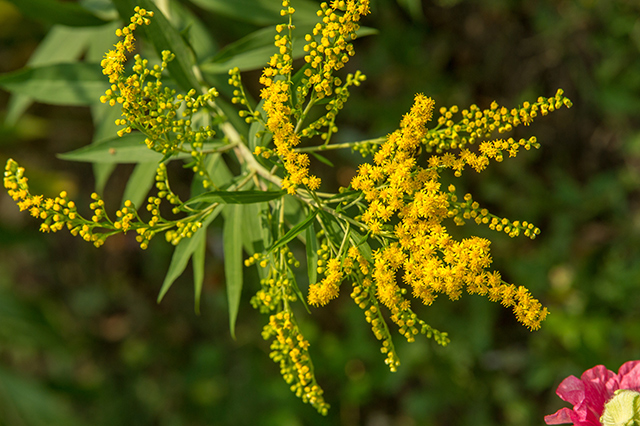
Goldenrod

Often considered a weed, the perennial goldenrod (Solidago canadensis) shouldn't be dismissed as such because of its antioxidant, anti-inflammatory and anti-histamine properties. It is well-known as a decongestant – effectively relieving blockages in the upper respiratory tract. This quality makes goldenrod a good choice for allergies, influenza, sinusitis or the common cold.

S. canadensis owes its medicinal properties to beneficial plant compounds it contains. Flavonoids like kaempferol and quercetin protect cells from damage caused by free radicals. Meanwhile, saponins in goldenrod enhance the immune system and help it ward off harmful pathogens. (Related: Stop spring allergies with these 5 easy-to-source herbs.)

Stinging nettle

Aspiring gardeners often link stinging nettle (Urtica dioica) with a painful encounter. However, the Arizona-based Sinus & Allergy Wellness Center considers it one of the most effective herbs for allergic rhinitis. In fact, stinging nettle has been used back in Ancient Greece for its anti-inflammatory properties.

Outside its painful quality, stinging nettle is a powerful antioxidant, astringent, antimicrobial and analgesic. It can reduce allergy-related inflammation without producing any adverse side effects. As a bonus, the leaves of stinging nettle can be cooked and added to salads, soups or stews – much like most green, leafy vegetables.

Horehound

A bitter herb of the mint family, horehound (Marubium vulgareis often used in cough drops that help loosen mucus – making it one of the most ingested herbs in the United States. Given its potential to help suppress a nasty cough, the herb also shows potential to treat seasonal allergies. Horehound can relieve stuffiness, so it's ideal to take it when the allergy-related sniffles hit.

M. vulgare's medicinal properties stem from its plant compounds, such as trace amounts of volatile oils, alkaloids, flavonoids and diterpenes. Marrubiin, the most active diterpene in horehound, is responsible for the herb's expectorant properties. Moreover, the bitter-tasting marrubiin increases the flow of saliva and gastric juice – stimulating the appetite as a result.

Rosemary

Rosemary (Salvia rosmarinus) is more than just a cooking herb: It also helps address inflammation caused by allergic reactions, thanks to its bioactive compound rosmarinic acid. One study published in International Immunopharmacology expounded on this anti-inflammatory effect.

According to the study authors, rosmarinic acid greatly decreased the inflammation in mucus cells and hyper-secretion of mucus cells in an animal model of asthma. They also found that the plant compound reduced the number of goblet cells that trigger mucus hyper-secretion. Goblet cells often multiply in response to different factors such as cigarette smoke, particles and toxins.

READ MORE>>>>


MOSQUITO BITES AND YOUR HEALTH

 It is best to avoid getting bitten by a mosquito and here is why...getting bitten by a mosquito could result in a great deal of health issues and even death. Let's look at what happens when you get bitten by a mosquito!

By Jennifer Rae Vliet

What Happens To Your Body When It's Bitten By A Mosquito

BY JOEY KEOGH from TheList.com
Mosquitoes must find nothing more delicious than human skin. That's how it feels when you're covered in itchy bites, agonizing over how to avoid scratching.  So what really happens when these deadly insects bite us?

The female mosquito lands on your skin and extends her proboscis (a narrow part of the mouth used to retrieve blood) into it as she tries to locate a yummy blood vessel. Mosquitoes aren't teeny vampires, though, they just need protein-rich blood to produce eggs and propagate their species. 

The mosquito injects us with a vasodilator, which keeps blood flowing rather than clotting while it feeds. It is this injection of the mosquito's saliva that causes the problem. As Dr. Renee Matthews, MD notes, our body reacts pretty strongly to this. "When a mosquito bites us, our body's immune system creates histamines, causing the skin around the mosquito bite to itch," she advises. Still, you might not notice right away and may even start itching hours later. Likewise, "Redness and swelling are part of the immune reaction, as well."

The Purpose for Mosquitos according to ThoughtCo.com in a column on The Most Interesting Facts About Mosquitos

Why Do Mosquitoes Exist?

Basically, mosquitoes exist because they're next to impossible to wipe out. Species don't exist in a vacuum; as long as they can find food and don't have environmental pressure against them, they'll continue. Mosquitoes are millions of years old as a species. In the ecosystem, they do serve as food for other species (birds, frogs, and fish) and as pollinators. The larvae eat detritus in the water, helping to clean it. There are more than 3,000 species of mosquitoes, but only about 200 bite humans.

So, whats the big deal? Dr. Josh Axe reports that you can actually acquire parasites from a mosquito bite...

How does someone become infected with a parasite?

Believe it or not, a relatively high percentage of adults living in the United States may carry parasites. Where and how does somebody get infected with a parasite?

Parasites are generally acquired from consuming contaminated food or water, but people with imbalanced gut flora, leaky gut syndrome or a weakened immune system may be more susceptible. Some can also be spread through the bite of a mosquito or sand fly, or transmitted to humans from animals such as cows and pigs that are infected with parasites like Cryptosporidium or Trichinella. (SOURCE)

Look what is happening right now in Peru

Brimful clinics, cemeteries as dengue ravages Peru

Piura (Peru) (AFP) – Two months after cyclonic downpours flooded the town of Catacaos in northern Peru, dozens of inhabitants lie sick and dying of dengue, a disease carried by mosquitos attracted by stagnant water.

Near the border with Ecuador, Peru's Piura region is battling a new health crisis even as the South American country is still recovering from the world's highest reported Covid-19 death rate.

This time it is an epidemic of dengue, a viral disease with symptoms ranging from fever, headache and joint pain to bleeding, organ failure and sometimes, death.

The virus is carried by the Aedes aegypti mosquito that lays its eggs in standing water, of which there is a lot in Piura since cyclone Yaku hit northern Peru in March.

Dozens of people were killed and thousands affected as rivers burst their banks, destroying homes and infrastructure.

Half of the Piura region's 416 clinics were damaged by the cyclone that also paralyzed the local economy as thousands lost their ability to survive from informal jobs.

Dengue patients are being cared for at home by family as public health systems have collapsed © ERNESTO BENAVIDES / AFP

'Lost control'

By June 13, Piura had reported 82 dengue deaths -- including 11 children -- and more than 44,000 infections since the start of 2023, said the region's rights ombudsman Cesar Orrego.

This was about a third of the national toll of 248 deaths and more than 146,000 infections.

We have lost control" of the epidemic, vector-borne diseases expert Valerie Paz-Soldan of the Cayetano Heredia University in Lima told AFP.

On Thursday, Peru's health minister resigned over her handling of the crisis.

Most of Piura's 1.8 million inhabitants live along the coast.

In Catacaos, an agricultural area, Yaku turned roads into rivers, destroyed the drinking water and sewerage systems, and ruined mango, grape and rice crops.

Water accumulated in open tanks, hollows and containers, multiplying mosquito breeding grounds. In the heart of Catacaos, the football field is still water-logged.

Multiple fumigation efforts failed to stop the epidemic spreading like wild-fire through the town's rickety homes. (SOURCE)

Then we have the Gates meddling in on nature and we know how things go when The Gates' viewpoint on sustaining life goes...this in its best estimation may sound good to environmentalists but the lack of trust with anything "Bill Gates" related needs to be heavily noted here.

A Company Just Released 150K Genetically Modified Mosquitoes in the United States

Genetically modified mosquitoes were just released in the US for the first time, thanks to a biotech firm funded by Bill Gates.

Chris Young of interestingengineering.com

he Bill Gates-backed biotech firm Oxitec is going ahead with plans to release hundreds of millions of gene-altered mosquitos in Florida in order to test an experimental new form of population control, the company confirmed in a press release. The initial batch of mosquitoes was released this week. 

The controversial project, conducted as part of a partnership between the Florida Keys Mosquito Control District (FKMCD) and Oxitec, will see six locations in the region host Oxitec’s gene-hacked male Aedes aegypti mosquitos over the next few months.

Oxitec — which announced a collaboration with the Bill & Melinda Gates Foundation in 2018 — says the new tests could help to greatly reduce populations of the mosquito breed, which is responsible for spreading diseases such as dengue and malaria.

As Oxitec emphasizes in its press statement, the company's mosquitos are male and, therefore, do not bite.

Instead, they are intended to reduce the number of potentially disease-transmitting female Aedes aegypti by introducing a self-limiting gene that sees offspring die before reaching adulthood. 

The firm says the Aedes aegypti accounts for only 4 percent of the mosquito population in the Florida Keys, but is responsible for almost all disease transmission. The company also states that community support for the project is "high."

Controversy amid global plans to gene-hack mosquitos

Still, the method is controversial due to the fact that a genetically altered species is being released into an ecosystem with potentially unknown consequences. Critics have also pointed to the fact that this may open doors for firms to use gene-altered invasive species for other uncontrolled projects.

Oxitec faced a backlash in August 2020, when it originally released its Florida Keys plans. In a press statement at the time, Dana Perls, the food and technology Program Manager at Friends of the Earth, said that "the release of genetically engineered mosquitoes will needlessly put Floridians, the environment and endangered species at risk in the midst of a pandemic."

The Oxitec technology has already been tested in São Paulo, Brazil, where after 13 weeks, it suppressed up to 95 percent of the mosquito species.

Oxitec's isn't the only method for gene-altering mosquitos to curb their populations — this month, it was announced that researchers from Imperial College London have successfully altered the gut genes of mosquitos to spread antimalarial genes to their offspring. The same team had previously used the gene-editing tool CRISPR to eradicate a population of Anopheles gambiae in a lab. (SOURCE)

________________________________________________________________

Mosquitos are something to avoid and something to respect all at the same time. I personally do what I need to do to keep from being bitten by them and if I happen to get the unfortunate bite, I always have The Bug Bite Thing tool at the ready. This is not a paid sponsorship but worth the mention because this little tool can help reverse what the mosquito deposits into your skin if you can get to it asap.

God had a purpose for all of His creations and expects us to be good stewards of our land and all that He has given us dominion over. There is a way to protect human life first and foremost and we are so advanced that all's it takes is research on ways to handle the problems that mosquitos can cause. When you look around and gene altering endeavors, it is imperative to look ahead and see how that is going to affect the cycle of life for other species but once again, human life is a priority and as you can clearly see, things can get out of hand and very quickly. The liberal agenda and their displaced compassion to a large degree and an outright mission to punish those of us that want to put humans first. They do not want us to harm life and protect even the flea; and by doing so, they have really tilted the scale and have caused a lot of harm to humankind.

In 2011, the state of California banned the usage of an incredibly effective enzymatic treatment of 2-{1-Methyl-2-(4-phenoxphenoxy) ethoxy} pyridine. By doing so, they actually caused what exterminators were calling a SUPER FLEA. They cared more about the fleas then everybody and every other living thing instead. By not being allowed to control the flea population, animals suffered GREATLY and thus as a result, PEOPLE SUFFERED. Exterminators were using their strongest chemicals and still couldn't control the problem. Outside critters suffered, birds, racoons, squirrels, you name it. FINALLY, they allowed the product back into the state in 2017. It was A LONG 6 years, let me tell you!

The bottom line is, get educated, protect yourself, and let's fight for life and be good stewards with what God has given to us, use our noggins and do what needs to be done as God would see fit!