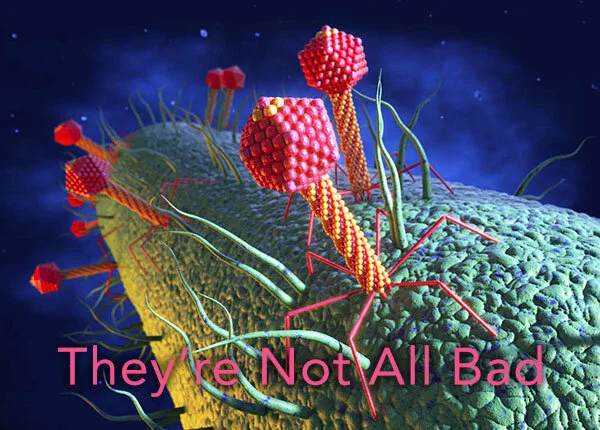
How can phages be used to treat bacterial infections?
Phages that are used for therapy are lytic, which means that they infect and destroy bacterial cells, effectively preventing the onward spread of infection.
Phages are highly specific to their bacterial hosts, that is the bacteria they target. They do not infect human cells but can target and kill bacteria that could cause disease without disrupting the body’s normal microbiota or causing significant side-effects. Phage therapy can be tailored to individual bacterial infections, particularly those that are resistant to antibiotics. Phages can be combined to make mixtures that can target most common infections. Phages can also be used alongside antibiotics to enhance treatment efficacy, especially against infections with antibiotic-resistant bacteria. In medicine, phages have been described as a “personalized medicine” – a group of treatments adapted to each patient individually.
In some countries in the eastern part of the WHO European Region, phages are more broadly used as a treatment for bacterial infections, especially when antibiotics fail.
However, unlike antibiotics, phages are not approved medicines (biological medicinal products) in most countries. Therefore, they are primarily used on compassionate grounds, in life-threatening situations, when all other treatments have been exhausted.
Further evidence from clinical studies is needed before phages can become available more widely for therapeutic use in humans.
How can phages be useful in combating AMR?
Phage therapy can be useful in the treatment and prevention of infections in humans, animals and plants, and potentially in the environment.
In humans, phages can be used as therapy for bacterial infections that are resistant to antibiotics, which means those that no longer respond to antimicrobial medicines. Case studies have shown the successes of phage therapy in the treatment of infections caused by bacteria, such as methicillin-resistant Staphylococcus aureus and Pseudomonas aeruginosa.
In veterinary medicine, phages are used to treat infections in livestock and companion animals, reducing the reliance on antibiotics and thereby decreasing the overall consumption of antimicrobials, which is considered a key factor in the development and spread of AMR. In agriculture and food production processes, phages can be applied to control bacterial diseases. Phages are used to target harmful bacteria like salmonella and Escherichia coli in poultry and cattle, reducing infections without relying on antibiotics.
Phage treatments are currently applied to crops like tomatoes, peppers, and potatoes to control bacterial pathogens such as Xanthomonas and Erwinia that cause diseases like bacterial spot and soft rot. Likewise, phage sprays are used to manage a serious bacterial disease caused by Erwinia amylovora, which affects apple and pear orchards.
In aquaculture, phages can replace the use of antibiotics and chemicals that may contribute to the development of AMR.
Other potential environmental uses of phages include disinfecting hospital surfaces and wastewater treatment.
Environmental phages could play an important role in One Health responses to AMR by helping us to better understand, control and limit the global and local emergence, selection and transmission of antibiotic-resistant bacteria and their genes.
The potential broader adoption of phage therapy requires further robust evidence to support its efficacy, safety, and feasibility across all One Health sectors.
Are phages new?
Phages have long been used to control microbes in human, animal and environmental settings. Many countries in eastern Europe have used phage therapy for over 100 years. In western Europe, phages are primarily used on compassionate grounds, in life-threatening situations, when all other treatments have been exhausted.
However, more evidence is needed to support the wider routine use of phages in humans.
Are phages substitutes for antibiotics?
Phages could offer an alternative to traditional antibiotics or be used in combination with them to enhance treatment efficacy.
In the case of drug-resistant bacteria, phages provide a biologically innovative approach to treating infections that can no longer be treated with traditional antibiotics.
However, further evidence from clinical studies is needed before phages can become widely available for routine therapeutic use in humans.
Can phages be used against all bacterial infections?
No, phages cannot be used for the treatment of all bacterial infections as it might not be possible to identify corresponding phages and amplify them for all bacterial infections. Although phages may be found, they might not have the right properties needed to treat infection.
Bacteria can develop resistance to phages, and complex, mixed infections would need treatment with a combination of multiple phages. For specific bacterial infections, phage therapy holds promising potential, but it cannot be used universally against all infections.
Can phages be dangerous to humans?
Phage therapy is generally considered safe for humans as phages do not target human cells. They do, however, interact with human cells that can take them up, which could be a useful way of targeting intracellular bacteria.
Nonetheless, there are some risks because, like antibiotics, phages can cause the release of endotoxins (toxic substances from bacterial cell walls), leading to inflammatory responses, especially in large-scale infections.
Further evidence from clinical studies and monitoring are needed before phages can become widely available for therapeutic use in humans.
Will phage resistance develop like for antibiotics?
Bacteria can develop resistance to phages, just like they can develop resistance to antibiotics, but phage-resistant bacteria are often less harmful. In response, phages can evolve, which can increase their effectiveness again. More research is needed to better understand phage resistance.
What is the future of phages as human medicine?
Like many personalized medicines, phages currently struggle to meet regulations designed for conventional medicines produced to a single formulation.
Further evidence from clinical studies and monitoring are needed before phages can become widely available for therapeutic use in humans. The path to regulatory approval for phage therapy needs to be addressed due to their biological nature and the need for personalized therapy approaches. Regulators may consider setting clinical trial and manufacturing standards for phages that reflect their unique characteristics and specificity for each patient treated.
How does WHO/Europe advance the evidence base on phages?
The existing expertise on phage research and practical application in the WHO European Region provides an opportunity to contribute to innovation.
WHO/Europe is working in close collaboration with the Global Antimicrobial Resistance Research and Development Hub in Berlin to explore the potential of phages for addressing AMR. Further research is needed to understand the full potential and mechanisms of phages in treating infections with different antibiotic-resistant bacteria and other diseases, and to develop standardized phage therapy protocols.
WHO/Europe is contributing substantially to the global evidence base on phages from a One Health perspective by raising awareness, fostering dialogue, strengthening international networks, and supporting the development of evidence.