If you suffer from seasonal allergies, a move to a far-flung location can deliver a reprieve from the pollens and molds that caused you torment. But in many cases, it’s only a matter of time before this new environment’s changing seasons elicit itchy eyes and a runny nose. Researchers have uncovered a probable origin story for emerging and reemerging allergies.
Exposure to bacteria or viruses typically sets off immediate alarm bells in the immune system, provoking a response to repel the infectious intruder. Allergies arise through a distinct branch of the immune system and unfold differently, according to immunologist Caroline Sokol, who wrote the paper along with postdoctoral fellow Xueping Zhu at the Ragon Institute of Mass General Brigham, MIT and Harvard University, and other scientists. In this context, repeated exposure over time to small amounts of a particular allergen gradually develops into a full-blown allergy.
The question popped up earlier this year in a Reddit discussion on dental hygiene: Anyone notice that Oral-B floss suddenly seemed different?
“It feels more plastic-like, rougher, less smooth,” the Reddit user noted. Wrote another: “It feels like I’m going to take a tooth along with it when I pull it out.”
Some dental floss manufacturers have indeed been quietly moving away from the synthetic material PTFE, which helped their product slip smoothly between teeth. Their decisions follow studies raising concerns as well as consumer worries and state regulation of consumer products containing PFAS, also known as “forever chemicals.”
Have you wondered if your low libido, mood, and fatigue are just a sign of getting older? And if so, is there anything you can do about it?
You have been to the doctor, and all your lab and imaging results say you are in "perfect health." But you know differently. You feel "off" and can't put your finger on why. It could just be aging — but might also be low testosterone levels.
As the primary sex hormone in men, testosterone plays an important part in overall health, both physical and mental. Understanding what your levels actually mean is the first step toward feeling like yourself again.
Dr. Rena Malik, urologist and pelvic surgeon, provides an in-depth, evidence-based discussion on the wide range of surgical options for benign prostatic hyperplasia (BPH), or enlarged prostate. The episode covers minimally invasive procedures like Rezum, Urolift, iTind, Optilume, and Aquaablation, as well as traditional surgeries including TURP, laser therapies, enucleation techniques, and robotic simple prostatectomy. Dr. Malik examines the benefits and risks of each treatment, addresses the impact on sexual function and recovery, and shares guidance on how to choose the right option based on prostate size, anatomy, overall health, and personal preferences.
What exactly is Candida will be expressed here as well as an at Home Test to See if You are Struggling With it…
What exactly is Candida, and when does it become a problem? This naturally occurring yeast attracts plenty of attention online. However, understanding the difference between its normal presence and an infection matters.
In this article, we explore Candida, common symptoms, and the widely shared at-home saliva test. We also share commentary from Dr. Joseph Mercola and Dr. Eric Berg, followed by a biblical reflection on fasting.
What Is Candida?
Candida is a type of yeast that can live naturally in and on the body. Its usual locations include the mouth, digestive tract, skin, and vagina.
Its presence alone does not mean you have an infection. However, when it grows out of control and causes an infection, the condition is called candidiasis.
Warm, moist areas can provide favorable conditions for yeast infections. These include skin folds, the groin, and the area beneath the breasts.
The location of an infection determines its symptoms and treatment. Therefore, understanding where symptoms occur is an important first step.
Candida Symptoms: What Might You Notice?
Yeast infections can cause uncomfortable symptoms. Depending on the affected area, these may include:
Itching, redness, or irritation.
A rash in moist skin folds.
White patches or soreness inside the mouth.
Vaginal soreness or unusual discharge.
Pain or difficulty swallowing.
However, these symptoms can have other causes. Persistent or recurring symptoms deserve an appropriate assessment.
Fatigue, low energy, digestive discomfort, and difficulty losing weight also attract attention in online discussions about Candida. Nevertheless, these symptoms alone cannot tell you whether a yeast infection is responsible.
Dr. Mercola’s Perspective on Candida
Dr. Joseph Mercola discusses Candida and his views on its possible effects on health in his article about yeast infections.
His discussion connects suspected overgrowth with a broad range of complaints. These include fatigue, digestive issues, and difficulty managing weight.
Those connections are claims from his commentary, rather than a checklist readers can use to diagnose themselves. In particular, difficulty losing weight does not establish that someone has candidiasis.
Readers interested in his perspective can explore the original source and compare it with established diagnostic guidance.
Dr. Eric Berg Discusses Yeast Infections
Dr. Eric Berg also discusses Candida in the video below:
Additional videos explore his views on different types of yeast infections and approaches to managing them:
As you watch, distinguish general commentary from advice tailored to your own symptoms and medical history.
The At-Home Candida Saliva Test
You may have encountered the popular morning “spit test.” Instructions usually involve spitting into a clear glass of water before eating or brushing your teeth.
Supporters interpret strings, cloudiness, or sinking saliva as signs of Candida overgrowth.
However, this test has not been validated for diagnosing candidiasis. Floating saliva does not rule out an infection, and sinking saliva does not confirm one.
For that reason, its appearance should not determine whether you begin treatment.
Instead, testing depends on the affected area. A healthcare provider may examine the mouth, collect a sample, or request laboratory testing.
Antibiotics and Candida: Understanding the Connection
Antibiotics can increase the risk of some yeast infections. They may disturb the bacteria that normally help keep yeast in balance.
However, antibiotics also treat important bacterial infections. Do not stop a prescription without discussing it with your healthcare provider.
If symptoms appear during or after treatment, ask about the appropriate next step. Getting the cause right can help prevent unnecessary treatment.
Although fasting receives attention in wellness discussions, it is not an established treatment for candidiasis. A diagnosed yeast infection may require antifungal medication.
Similarly, spiritual fasting has a purpose beyond attempting to treat a physical condition. That distinction brings us to the biblical meaning of fasting.
A Biblical Perspective on Fasting
At The Plain Truth, we believe caring for our health also invites us to consider our relationship with God.
Leviticus 23:27–32 describes the Day of Atonement and commands God’s people to afflict themselves. We understand this observance to include fasting.
However, observing a religious fast and treating an infection are separate matters. Anyone considering fasting should account for their health conditions and medications.
Responding to God With Love and Obedience
Why does God call His people to obedience?
We believe the answer begins with His love. John 14:21 connects loving Christ with keeping His commandments.
Scripture also calls us to humility, prayer, and repentance. In 2 Chronicles 7:14, God speaks of His people humbling themselves, seeking His face, and turning from wickedness.
These passages invite reflection on how we live each day. They encourage us to seek God sincerely and respond to Him faithfully.
Our desire is to care for the lives He has entrusted to us. That includes seeking understanding, making thoughtful choices, and approaching our health with wisdom.
God’s love gives us a reason to draw closer to Him. May our response be one of gratitude, faith, and obedience.
In this 12 minute segment from her show, Full Measure, journalist and five time Emmy Award winner Sharyl Attkisson presents an update on the controversial link between the ever-expanding childhood vaccine schedule and the explosion in autism among our children.
Sharyl calls one in every 31 children with autism in the U.S. an ‘epidemic’ and a ‘crisis’—something no U.S. health official has ever done over the past quarter century.
She names the health officials who have admitted there is a link, but who were subsequently ignored or sidelined.
We are told about the massive control the vaccine industry has over members of Congress and about the opposition to any mention of vaccines and autism from the American Academy of Pediatrics, which is well-funded by Big Pharma.
It’s clear that this debate is not just about a link between vaccines and autism. It is about who will be ultimately held accountable if the truth about vaccine-induced autism is fully recognized.
How much longer can the massive cover-up can continue? When will our legislators, health care agencies, the media and the medical community finally make the health of our children a priority?
US authorities are set to screen travelers from Siberia at JFK airport in New York. Pictured above is a person in personal protective equipment at the airport amid the coronavirus pandemic in May 2020
New York has increased its surveillance and is monitoring passengers from Russia at one of its major airports after reports emerged from the country that a researcher died of the pneumonic plague.
Centers for Disease Control and Prevention (CDC) Director Erica Schwartz announced the monitoring will be established at John F Kennedy International Airport in Queens, New York, during a Wall Street Journal event on Wednesday, saying it would 'protect' the country from threats.
She said: 'We are working with Department of Homeland Security, Department of State, Department of War, and other agencies within the government to make sure that we know exactly if anyone from that area comes into the US.
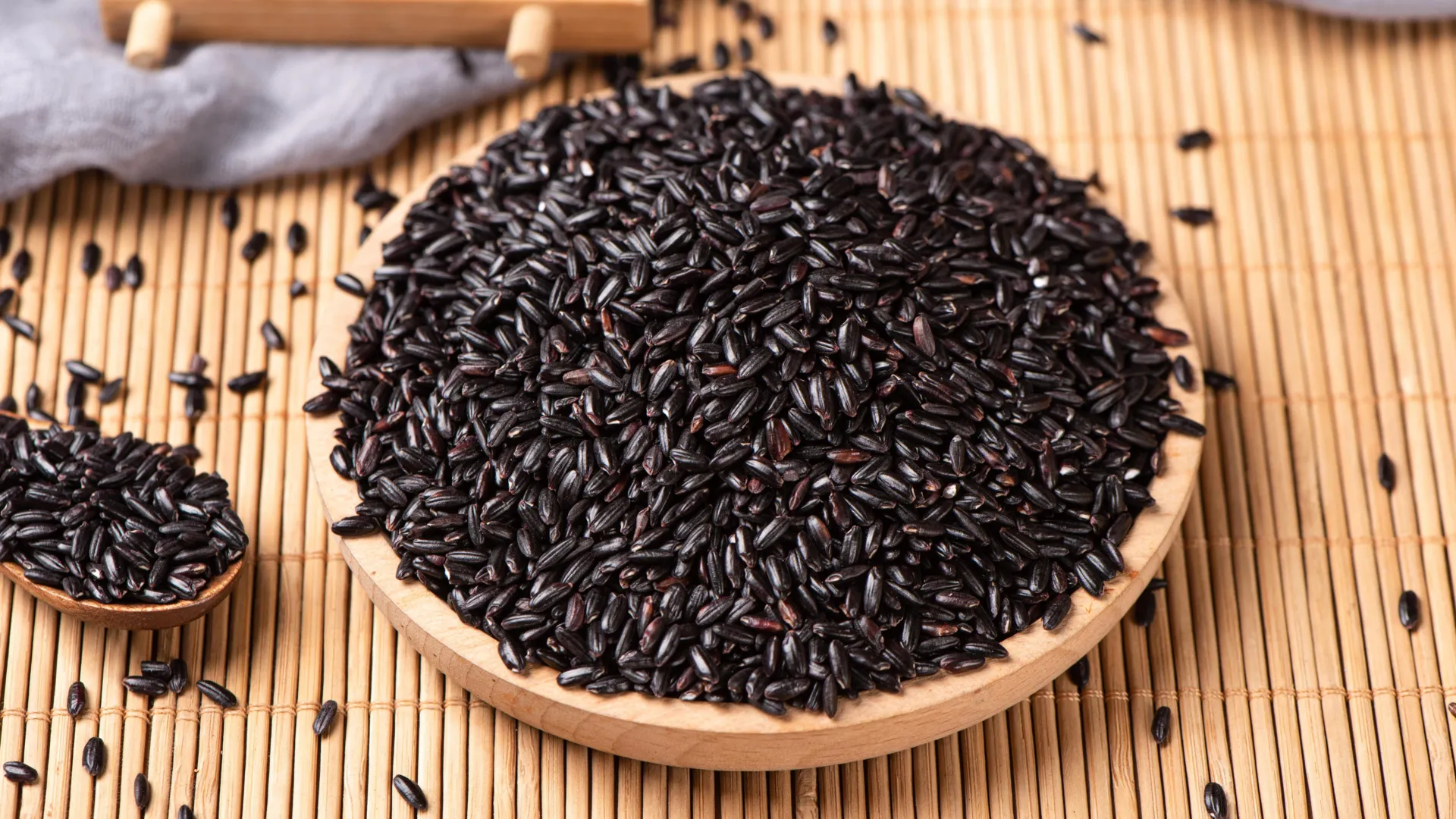
Scientists analyzing 56 varieties of Japanese japonica rice uncovered a surprisingly rich world of healthy fats hidden inside a food best known for starch. Credit: Shutterstock
Black and green rice may hide a surprising health advantage, with unique fats and slower-digesting starch that could help support better blood sugar control.
Rice is a dietary staple for more than half of the world's population, but scientists still have much to learn about its nutritional makeup. More than 85% of the rice people eat consists of starch. It also contains protein (around 10%), fat (roughly 2%), vitamins, and trace elements. Because lipids make up such a small share of the grain, they have received far less attention than starch, even though they can influence nutrition, flavor, and overall grain quality.
Researchers at Hokkaido University set out to take a closer look at these overlooked fats by studying japonica rice, the short- to medium-grain type commonly associated with Japanese rice. When cooked, japonica rice typically becomes soft, tender, and slightly sticky. It represents about 15% of rice consumption worldwide.
Date:
September 16, 2026
Source:
Hokkaido University
Summary:
Scientists found that black and green Japanese rice contain unusual, potentially beneficial fats and may be digested more slowly than ordinary white rice. The combination could make these colorful varieties promising ingredients for foods designed to support blood sugar and metabolic health.
A 30-second exercise just a few times a week may significantly lower blood pressure, a new study suggests
A 30-second workout done as little as once a week may help lower blood pressure and boost longevity, a new study suggests.
Researchers in the UK followed 100 relatively sedentary adults for about four weeks to test if isometric exercise training – contracting your muscles while in a static position – could help lower their mildly high blood pressure.
About three times a week, the participants performed wall sits, which involve holding a seated position against the wall to help build lower-body strength.
Linus Pauling was widely mocked for claiming that vitamin C could fight cancer, especially after trials using vitamin C pills showed no benefit. Researchers now know that intravenous vitamin C reaches vastly higher concentrations and can behave more like an experimental cancer drug than an ordinary supplement. Early studies suggest it may damage vulnerable cancer cells, reduce treatment side effects, and possibly improve outcomes for some patients.
Moderate coffee may help the heart, but high-powered energy drinks could push caffeine into dangerous territory.
Date:
July 21, 2026
Source:
American Heart Association
Summary:
For most adults, a daily caffeine habit may be safer for the heart than many people assume. A new American Heart Association review found that up to 400 milligrams of caffeine a day, roughly three to five cups of regular black coffee, is generally safe and may even be linked to lower risks of heart disease, stroke, heart failure, and Type 2 diabetes. But the source matters: highly concentrated energy drinks and shots can sharply raise blood pressure and trigger irregular heart rhythms.
One everyday fat may push the body toward diabetes, while another—abundant in olive oil—could help protect against it.
Date:
June 21, 2026
Source:
University of Barcelona
Summary:
Not all fats affect your body the same way. Researchers found that palmitic acid, a saturated fat common in many foods, may contribute to insulin resistance and type 2 diabetes by triggering inflammation, toxic fat buildup, and cellular stress. In contrast, oleic acid—the heart-healthy fat abundant in olive oil—appears to help protect insulin function and may even counter some of the harmful effects of palmitic acid.
An advanced Alzheimer's patient reportedly recovered significant speech, memory, mobility, social engagement, and urinary continence following a supervised high-dose session involving psilocybin-containing mushrooms.
A stunning medical case is raising new questions about what may still be possible for patients suffering from advanced Alzheimer's disease.
A Japanese-American woman in her 80s who had spent five years barely speaking, unable to walk on her own, and incontinent of urine started talking about her own life again roughly 19 hours after a single oral dose of psilocybin-containing mushrooms, according to a case report published May 28, 2026, in Frontiers in Neuroscience.
The paper, "Transient multidomain functional improvement in advanced Alzheimer's disease following high-dose psilocybin-containing mushroom administration," was written by Marcos Lago, Mariana Cerveira, and Joe Xavier Simonet of the Associação Cruz de Ankh in São Paulo, Brazil. It is one patient. It is not a randomized trial. The authors are explicit that the findings "do not imply disease reversal."
The patient had a clinically diagnosed 10-year history of Alzheimer's disease, including five years of marked hypofunction.
At baseline she spoke mostly in single syllables. She had chronic urinary incontinence, needed help to walk, could not dress herself, had a flat affect, trouble swallowing, and severe loss of spontaneous communication.
She lived under continuous family and caregiver supervision. Formal biomarker confirmation and advanced imaging were not available, and the authors note that a vascular or mixed contribution cannot be fully excluded.
“He made the moon to mark the seasons; the sun knows its time for setting.”
— Psalm 104:19 (ESV)
By Jennifer Rae Vliet
From the very beginning, God designed creation with order, rhythm, and purpose including the moon, a faithful light in the night sky. While often admired for its beauty, the moon also plays a quiet but significant role in our daily lives. It not only governs the tides but also affects the rhythms of our bodies and emotions in ways we are still discovering. It is fascinating to explore how the moon, as part of God’s intricate design, influences us physically and emotionally. The moon is an important reminder that even the heavens declare His handiwork. I mean, come on, did you see the super moon the other night?
As believers, it’s essential to approach topics like the moon’s influence with wisdom and discernment. While scientific evidence suggests the moon may affect aspects of our physical and emotional rhythms, we must be careful not to assign it any spiritual power or control over our lives. God’s Word is clear: “You shall have no other gods before Me” (Exodus 20:3). Placing trust in lunar phases, astrology, or cosmic forces distracts from the truth that our well-being, body, mind, and spirit, is sustained by God alone. “Great is our Lord, and abundant in power; His understanding is beyond measure” (Psalm 147:5).
Creation may reflect God’s glory, but it is not to be worshiped or feared. Our peace comes not from the heavens above us, but from the One who reigns over them. The moon, in its faithful orbit, invites us to stand in awe of His wisdom and care!
With that said, I think this science paper shared by Ben Davidson from Suspicious Observers recently is worth the read and so very interesting! Enjoy!
The Influence of Natural Cycles on Human Cognitive Activity and Psychophysiological State
This scientific paper investigates the potential impact of natural cycles, with a particular emphasis on lunar phases, on human cognitive activity, productivity levels, and psychophysiological state. The study explores theoretical mechanisms behind these effects, drawing on insights from neurophysiology, endocrinology, and psychophysiology. The research highlights how gravitational and electromagnetic fluctuations during different lunar phases may influence hormonal balance, neurotransmitter activity, and overall brain function. The practical part of the study involved a comprehensive questionnaire survey conducted among 68 participants aged 18 to 50 years, who were free from significant somatic, neurological, or psychiatric conditions. Participants were observed over a complete lunar cycle (28–30 days) and reported changes in cognitive performance, emotional well-being, and sleep quality. Analysis of the collected data revealed notable patterns: the full moon phase was often linked to heightened nervous excitability, emotional instability, and disrupted sleep, while the new moon phase frequently correlated with reduced energy levels, fatigue, and cognitive slowdown. However, the findings also emphasized individual variability, with some respondents reporting no significant effects. The results underscore the complexity of biological responses to lunar cycles and highlight the need for further interdisciplinary research to identify precise physiological mechanisms. The study’s findings could have practical applications in developing strategies for optimizing productivity, managing stress, and improving sleep quality by aligning daily routines with natural biorhythms.
Relevance. Natural cycles play a key role in regulating human biological processes, particularly influencing cognitive activity, productivity, and 2025 All rights reserved | Creative Commons Attribution-ShareAlike 4.0 International License 817 Міжнародний науковий журнал «Грааль науки» | № 51 (квітень, 2025) ISSN 2710–3056 psychophysiological state. Among these cycles, the lunar cycle holds a special place, traditionally considered one of the potential factors shaping physiological and psycho-emotional responses of the body. Despite the absence of clearly established mechanisms for this influence, numerous observations indicate a certain pattern in changes in well-being, energy levels, attention concentration, and sleep quality depending on the phases of the Moon. This necessitates a scientific analysis of potential neurobiological, hormonal, and psychophysiological mechanisms that may underlie these phenomena. Turányi, C. Z., Rónai, K. Z., and Zoller, R. state that one of the key aspects of the potential influence of the lunar cycle is its relationship with circadian rhythms [5]. It is known that human circadian rhythms are regulated by the suprachiasmatic nuclei of the hypothalamus, which coordinate the biological clock under the influence of light stimuli. At the same time, researchers point to the possible modulation of these rhythms due to changes in the intensity of moonlight, which may affect the secretion of melatonin — the hormone responsible for sleep regulation. It has been proven that during a full moon, some people experience a reduction in sleep duration and depth, which may potentially affect cognitive functions and productivity levels throughout the day. In addition to circadian rhythms, the influence of lunar phases on hormonal balance is also considered. Raison, Klein, and Steckler note that “disruptions in neurotransmitter levels, such as cortisol, serotonin, and dopamine, can have a significant impact on emotional state, manifesting as anxiety and depression” [8]. Changes in cortisol, serotonin, and dopamine levels are crucial because these hormones are key regulators of mood, motivation, and cognitive activity. An imbalance in these neurotransmitters can cause fluctuations in the psycho-emotional state, observed both in healthy individuals and in patients with mental disorders. According to Bondarenko, Y., & Mozgova, T. (2025), some studies also suggest a possible link between lunar phases and the exacerbation of affective disorders, increased anxiety levels, and a rise in psychiatric hospitalizations, although the mechanisms behind these changes remain insufficiently studied [22]. Another potential factor influencing the lunar cycle is geophysical changes, particularly microgravitational variations and fluctuations in the Earth’s magnetic field, which may affect physiological processes in the body. In some of his experimental works, Zimecki M. suggests that biological systems, particularly the nervous and cardiovascular systems, may be sensitive to such changes, which could theoretically explain periodic fluctuations in energy levels and productivity [10]. The relevance of this research is driven not only by scientific curiosity about the phenomenon but also by its practical significance. If the influence of lunar phases on cognitive activity and the psychophysiological state of a person is confirmed, it could have important implications for optimizing work schedules, improving sleep regulation, and developing recommendations for enhancing productivity. Studying this issue requires an interdisciplinary approach that combines neurophysiological, endocrinological, psychophysiological, and chronobiological research methods. Thus, analyzing the influence of the lunar cycle on cognitive processes and the psycho-emotional state of a person is important from both a fundamental and applied perspective. Research in this field may contribute to a better understanding...