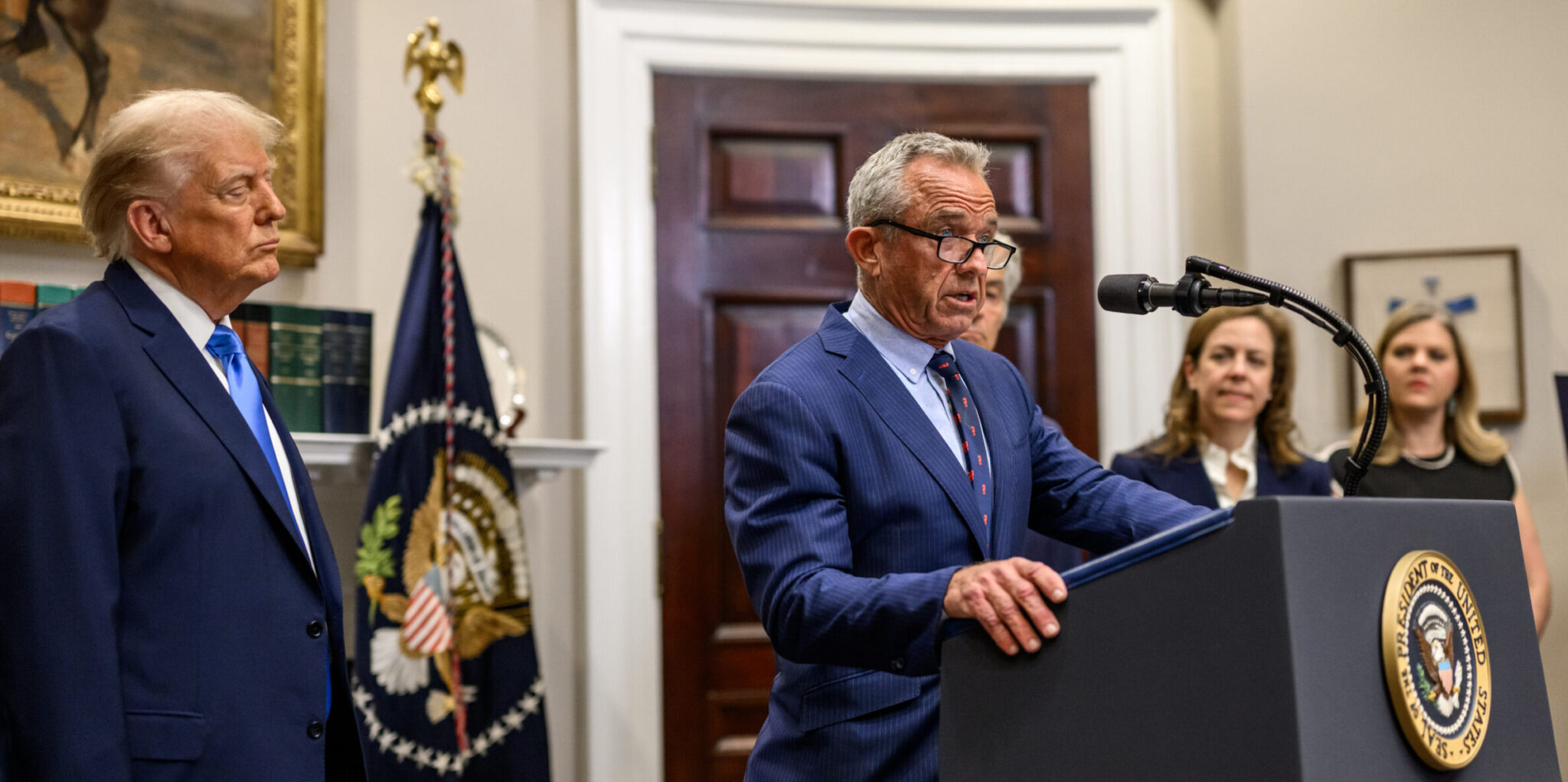
The administration of President Donald Trump on Wednesday announced a new slate of dietary guidelines that recommends Americans eat more protein and less sugar than previously advised and that consumers avoid highly processed foods to achieve a healthy diet.
The guidelines are the latest product of the Trump administration's "Make America Healthy Again" agenda, named for the social movement that backs Health Secretary Robert F. Kennedy Jr.
He and other officials, including Agriculture Secretary Brooke Rollins, have implemented MAHA policy goals such as curbing childhood vaccines and restricting access to unhealthy foods for people receiving food stamps.
Kennedy and Rollins had pledged to simplify the guidelines and remove what they described as the undue influence of food companies over their recommendations.
The guidelines are published every five years by the Department of Health and Human Services and the Department of Agriculture.
Scientists say that eating meat could be the secret to living to 100, as a study shows that vegetarians are less likely to reach this age. Pictured: Ethel Caterham, from Surrey, the oldest living person in the UK
Veganandvegetariandiets might seem like the healthy choice, but scientists now say that avoiding meat could scupper your chances of reaching 100.
According to a major Chinese study, meat eaters are actually more likely to reach the milestone age than their plant-eating counterparts.
Even after accounting for factors like exercise and smoking, people who cut meat out of their diet were 19 per cent less likely to make it to 100 compared to omnivores.
This trend was the most pronounced among vegans, who are a staggering 29 per cent less likely to become centenarians.
Vegetarians, who still eat eggs and dairy, were only slightly more likely to make it to 100, with their odds being 14 per cent worse than those of meat eaters.
Even trendy pescetarian diets, which include fish, were linked with reduced odds of reaching 100.
Lead author Dr Xiang Gao, of Fudan University, says: 'Our study suggests that in adults aged 80 years and older, a diet including both plant and animal-derived foods may better support survival to 100 years than a strictly vegetarian pattern, especially for those who are underweight.'
In an age of fad diets, superfood crazes, and contradictory nutrition advice, the Bible offers something refreshingly timeless: a way of eating rooted in creation, balance, and purpose.
The biblical diet is not simply about avoiding certain foods or following a list of rules, it’s about aligning our body, mind, and spirit with God’s design for nourishment. It is grounded in Scripture, validated by modern nutritional science, and supported by psychology and NLP as a framework for lasting change.
The foods God prescribed, and the manner in which He instructed us to eat — promote optimal health, mental clarity, emotional stability, and spiritual strength.
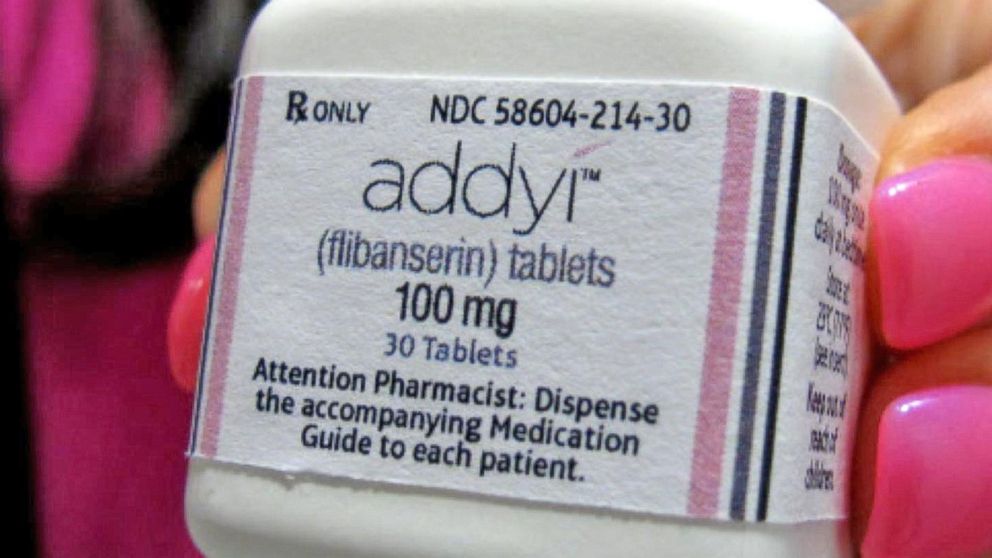
On December 15, 2025, the U.S. FDA approved Addyi (flibanserin) for the treatment of hypoactive sexual desire disorder (HSDD) in postmenopausal women under the age of 65.
Addyi was previously approved in 2015 for the treatment of HSDD in premenopausal women.
Past research shows that between 40-55% of people advancing through menopause experience low sexual desire, and about 9% of postmenopausal women have HSDD.
Addyi was previously approved in 2015 for the treatment of HSDD in premenopausal women. Premenopause or “before” menopause refers to the reproductive time in a cisgender woman’s life when they have regular menstrual cycles.
Postmenopause refers to the time period after the person finishes menopause and no longer has a menstrual cycle. The majority of people start menopause between the ages of 49 and 52Trusted Source.
While people can experience HSDD at any age, it is not uncommon to experience a low libido during menopause and postmenopause. Past research shows that between 40-55% of womenadvancing through menopause experience low sexual desire, and about 9% of postmenopausal women have HSDD.
With the expanded approval to postmenopausal women under 65, Medical News Today spoke with three women’s health experts to find out more about how Addyi works, its side effects, what does this approval mean for menopausal women, and any non-medication alternatives they suggest for low libido.
Recent studies have highlighted the potential health benefits of coffee, particularly its influence on longevity and reducing chronic disease risk.
A study suggests that consuming 3 to 4 cups of coffee daily could increase lifespan and may add 5 extra years of life.
A recent review also indicates that 3 to 5 cups of coffee a day could decrease mortality and lower the risk of some diseases.
A third piece of research further suggests the health benefits of drinking coffee, especially in women as they get older.
Coffee is among the world’s most popular beverages, with more than 2 billion cups of coffee consumed daily worldwide.
Roughly two-thirds of American adults drink coffee each day, with the average American coffee drinker consuming 3 cups per day.
Given the high consumption levels of coffee, ongoing research is investigating the health consequences of coffee intake. As well as being a favored drink, coffee consumption may also provide numerous health benefits, possibly reducing mortality and lowering disease risk.
Healthy aging refers to the process of maintaining physical, mental, and social well-being throughout life. It typically involves focusing on preventative care and making healthy lifestyle choices, such as being mindful of one’s dietary pattern.
While more research is still necessary, growing evidence is highlighting how coffee consumption may contribute to healthy aging
Medical News Today looks at three recent studies we have covered to offer an overview on the role of coffee and how it may benefit healthy aging.
Novo Nordisk has announced the cessation of the Evoke trials, looking at whether GLP-1 drugs could help tackle Alzheimer’s. Image credit: NurPhoto/Getty Images
Pharmaceutical giant Novo Nordisk recently conducted a large-scale study investigating whether weight-loss drug semaglutide could slow Alzheimer’s progression.
Unfortunately, the study was unsuccessful, and the trial was halted early.
However, although more research is needed, the results are not entirely negative.
GLP-1 agonists have taken the pharmaceutical world by storm. The active ingredient, semaglutide, is used in the now-famous Ozempic and Wegovy medications for diabetes and weight loss.
Already, these drugs have helped millions of people manage their weight and treat type 2 diabetes.
But could they also help tackle Alzheimer’s disease? Recent clinical trials focused on one of Novo Nordisk’s older diabetes medications called Rybelsus.
Because ongoing efforts to slow the progression of Alzheimer’s have largely been disappointing, even a minor success would provide a rare glimmer of hope for people in the early stages of the condition.
Dementia is an umbrella term for Alzheimer's, vascular dementia, and other conditions, and it affects more than 7.2 million Americans (stock)
Scientists have uncovered a link between eating hefty servings of high-fat cream and cheese and a reduced risk of dementia.
In a 25-year study that included food diaries and interviews with more than 27,000 Swedes, researchers found that eating at least 50 grams of full-fat cheese per day and at least 20 grams of full-fat cream per day were correlated with lower dementia risk.
Dementia, an umbrella term that encompasses Alzheimer’s, vascular dementia and several other types afflicts more than 7.2 million Americans, though that rate could be higher.
Sleeping fewer than seven hours per night is linked to shorter life expectancy across all 3,000+ U.S. counties studied, regardless of income level, healthcare access, or urban versus rural location.
Sleep insufficiency ranked as the second-strongest predictor of reduced life expectancy after smoking when examining county-level data from 2019 to 2025, ahead of physical inactivity and diabetes.
Neighboring counties can show vastly different sleep patterns and corresponding life expectancy gaps of several years, revealing potential targets for local public health interventions.
The relationship between inadequate sleep and mortality remained consistent across all years studied, including during the COVID-19 pandemic, and held true even when researchers controlled for obesity, smoking, and other major health factors.
WHAT HAPPENED: A panel appointed by Health and Human Services (HHS) Secretary Robert F. Kennedy Jr. is reportedly preparing to recommend changes to vaccination schedules, including delaying the hepatitis B vaccine for newborns.
WHO WAS INVOLVED: RFK Jr., the U.S. Centers for Disease Control and Prevention (CDC) vaccine advisory panel, and American children.
WHEN & WHERE: The CDC panel meeting is scheduled for December 4 over two days, with discussions and a vote on the hepatitis B vaccine recommendation.
KEY QUOTE: “Hepatitis B is sexually transmitted. There’s no reason to give a baby that’s almost just born hepatitis B. So I would say wait till the baby is 12 years old and formed and take hepatitis B.” – President Donald J. Trump.
IMPACT: The changes will be a relief to many young parents who feel that too many vaccines are pushed on infants and young children too early in life.
IN FULL
An advisory committee appointed by Health and Human Services (HHS) Secretary Robert F. Kennedy Jr. is expected to propose major revisions to U.S. childhood vaccination schedules, including the possibility of postponing the hepatitis B shot normally given to newborns. The U.S. Centers for Disease Control and Prevention (CDC) vaccine advisory group is set to debate and vote on the recommendations during a two-day meeting beginning December 4.
Kennedy, who has been a prominent critic of federal vaccination policies, previously dismissed the entire 17-member CDC advisory panel and replaced it with less establishment figures, including several well-known vaccine skeptics.
President Donald J. Trump endorsed delaying the hepatitis B vaccine for babies earlier this year, saying, “Hepatitis B is sexually transmitted. There’s no reason to give a baby that’s almost just born hepatitis B. So I would say wait till the baby is 12 years old and formed, and take hepatitis B.”
The upcoming debate is unfolding alongside Kennedy’s broader effort to reshape federal vaccine policy. Since taking office, he has repeatedly questioned the safety of several childhood and COVID-19 vaccines. He has also argued that a possible link between vaccines and autism has not been “debunked,” stressing: “The claim ‘vaccines do not cause autism’ is not an evidence-based claim because studies have not ruled out the possibility that infant vaccines cause autism.”
Summer McKesson struggled to breathe for years. Doctors told her it was because her blood would not stop clotting – and they couldn’t figure out why.
A single clot alone can be lethal; but the recurring and unexplained clots that formed in McKesson’s heart and lungs were a medical mystery.
After multiple surgeries to remove clots and scar tissue, McKesson traveled to the Mayo Clinic, where she sat in a conference room while renowned physicians and specialists worked through her case on a whiteboard.
But even they were baffled.
“To hear that even they had never seen it before,” she told CNN through tears, “I came back (home) just crushed at that point.”
Desperate for answers, McKesson said she turned to 23andMe, hoping the DNA analysis service, which claims to offer insights into its clients’ genetic health history, might unlock some clues to her condition.
But her quest for answers would unearth a family secret – and a doctor’s decades-old deception that has ensnared multiple families across the country.
Ask your parents about Dr. Peete
McKesson never questioned her genetics – or considered 23andMe – until a team of surgeons performed an urgent, open-heart procedure in 2022 to remove clots from her heart and lungs.
As she recovered, McKesson said her surgeon dropped another bomb.
While operating, he’d noticed the connective tissue that supports her organs was stretchy and unusually fragile. He told her the complication – coupled with McKesson’s willowy build and Amazonian height – could be a sign of an inherited disorder called Marfan syndrome.
His suspicions were correct. A geneticist confirmed McKesson’s diagnosis, and said her clotting disorder was also genetic, which ushered in a host of lifelong health challenges.
Her heart would now need to be constantly monitored, and she will eventually need at least one more major heart surgery.
But the diagnosis was puzzling for another reason: both of her conditions are genetic and, as far as she knew, no one else in her family had them.
Summer McKesson recovering from surgery - Courtesy Summer McKessonSummer McKesson post surgery scar - Courtesy Summer McKesson
McKesson, 43, said she didn’t have a full picture of her family’s health history because her father died when she was a teenager. So, she signed up for 23andMe, submitted a DNA sample, and waited.
The results arrived in her inbox in October 2023.
“I was just sitting on my couch after work, and kind of quickly pulled up the results on my phone,” McKesson recalled. At first, she said, she was curious to learn more about her family’s ethnic background.
“Growing up, I always was like … ‘I don’t look like any of y’all. No one has my nose. I’m a foot taller than everyone,’” she said, adding her family used to joke that she was adopted.
While there weren’t many surprises in her family’s ancestry, McKesson said when she navigated to the “family members” section of the site, she drew up short:
The test showed she had seven half-siblings.
“I just remember being shocked and my mind just swirling,” she said. “I’m like, how is this possible? … Did my dad have another family or something?”
Was she actually adopted? None of what she was learning made sense.
She sent screenshots of the results to a trusted group of friends, and they discussed different theories. Then, later that night, she sent a message to her newly discovered half-siblings through the 23andMe website.
“Humor has really gotten me through a lot of this,” McKesson said, so she opted for a lighter tone in her first note.
She sent the same message to each name listed on the site. And then, she waited. It would take more than a month for anyone to respond.
“I don’t want to cause any conflict,” one of them finally wrote, “but if you want to dig into this, I’d ask your parents if they went to see Dr. Peete.”
A doctor’s decades of deception
Chelsea Bailey, CNN
In 1980, Laurie Kruppa and her husband, Doug, found themselves waiting for a fertility specialist named Dr. Charles Peete in a sterile exam room at Duke University Hospital.
The couple wanted children, Laurie told CNN, but Doug had a vasectomy during a previous marriage, so her OB-GYN referred them to the physicians at Duke for fertility treatment.
The 1980s and ‘90s would prove to be a time of innovation in the fields of genetics and assisted reproductive technology. In 1978, a woman gave birth to a baby named Louise in the United Kingdom through in vitro fertilization, or IVF, making her the first child to be born through the novel procedure.
But the Kruppas opted to use intrauterine insemination, or IUI, a procedure that had been around in some form for centuries but had only recently become common thanks to advances in freezing and banking sperm.
Florida Governor Ron DeSantis is raising the alarm after uncovering a chilling globalist plot to spread a fatal meat allergy among the general public to supposedly “fight climate change.”
DeSantis has denounced what he calls a “deranged” global agenda to genetically engineer people to develop a red meat allergy.
The Republican governor linked the plan to the World Economic Forum (WEF) and United Nations (UN), both of which are pushing to eliminate traditional diets and control the food supply in the name of “saving the planet.”
DeSantis’s comments came after resurfaced footage showed a New York University bioethicist proposing that humans could be intentionally engineered to become allergic to meat to reduce consumption and fight climate change.
“Genetically engineering humans to become allergic to meat because some elites think people eat ‘too much’ of it is insane,” DeSantis posted on X.
“Human Engineering” to End Meat Consumption
In the 2016 video, Dr. Matthew Liao, director of the NYU Center for Bioethics, told a live audience that ticks could be used to induce an allergy to red meat.
This same idea is echoed by other global bioethicists.
“People eat too much meat,” Liao said.
“And if they were to cut down on their consumption of meat, then it would actually really help the planet.”
On October 16, the president announced a series of steps his administration will take to lower the price of fertility drugs such as Gonal-f, which is commonly used by women for IVF procedures in order to produce eggs for retrieval.
Following President Donald Trump’s announcement last week detailing actions his administration is taking to “lower costs and expand access” to controversial in vitro fertilization (IVF) procedures as well as other fertility treatments, numerous experts say that while the expansion of access to restorative reproductive medicine is commendable, the effort to expand IVF will contribute to the continued destruction of human life.
On October 16, the president announced a series of steps his administration will take to lower the price of fertility drugs such as Gonal-f, which is commonly used by women for IVF procedures in order to produce eggs for retrieval. In addition, federal agencies will also now assist employers with the option of covering standalone IVF health insurance plans. The measures come eight months after Trump signed an executive order promising that his administration would “expand access” to IVF.
The president noted in last week’s announcement that his administration “wants more babies” and is “pro family. … I’ve been in favor of IVF, right from the beginning.” In remarks from the Oval Office, he stated, “I think this is very pro-life. You can’t get more pro-life than this.”
But experts point out that the process of IVF involves the destruction of human life on a vast scale. In order for the IVF process to give mothers a chance at a successful birth, most couples have up to eight embryos created in a single IVF cycle in a laboratory, but only a select few are implanted in the mother’s womb. The excess embryos are typically frozen indefinitely or discarded. In 2021 alone, approximately 4.1 million embryonic children were created via IVF, but only 97,128 of those embryos were born as live babies. Estimates suggest that over 97% of all embryonic children that are created are “discarded, miscarried, frozen indefinitely, or donated for use by others for experimentation.”
At the same time, the Trump administration’s initiative also called for employers to provide benefit packages for non-IVF fertility treatments that “address the continuum of fertility-related services” including “those that address the root causes of infertility.” Experts like March for Life President Jennie Bradley Lichter say that restorative reproductive medicine (RRM) “aims to resolve rather than ignore underlying medical issues, to increase health & wellness while also restoring fertility, and to respond to the beautiful desire for children while avoiding any collateral loss of human life.” RRM methods include NaPro Technology, FEMM, and the Billings Ovulation Method. There are numerous health centers across the country that practice RRM.
Reproductive endocrinology and infertility physician Dr. Lauren Rubel says that RRM methods are statistically more likely to result in births than IVF. “[There’s] a 37% chance of live birth per IVF cycle for everyone in the U.S., according to recent data,” she observed during a panel at the Pray Vote Stand Summit over the weekend. “With restorative reproductive medicine, there are studies showing a 30% to 66% chance of live birth over a period of two years using techniques that help restore your own health, your wellness, and decrease risk to moms and babies, too.”
Christian leaders like Arlington, Va. Bishop Michael Burbidge commended the administration for promoting optional fertility insurance benefits that provide “ethical fertility care” but also warned of the ethical and moral problems with IVF. “Thankfully, the White House has not introduced any federal mandate that medical insurance cover IVF, and these recent announcements do not directly violate religious liberty or conscience rights,” he stated. “Yet, the fact remains that IVF is contrary to the common good and therefore it is wrong for the federal government to promote IVF as if it were a morally neutral form of fertility care.”
Mary Szoch, who serves as director of the Center for Human Dignity at Family Research Council, told The Washington Stand that while the administration’s efforts to increase fertility should be praised, there is still time for the White House to change course on IVF.
“Countless American couples are hoping to conceive a child, and President Trump should be commended for his efforts to bring this good and godly hope to fruition,” she remarked. “The parts of Trump’s announcement that will expand access to restorative reproductive medicine should be commended. Restorative reproductive medicine addresses the root cause of infertility and improves the health of Americans while helping women carry a child to term. It promises couples the highest levels of health care, and it is the type of medicine Americans deserve.”
“At the same time,” Szoch continued, “I am incredibly saddened by the announcement that through the administration’s efforts, the IVF industry will expand. The IVF industry has preyed upon the hopes and dreams of so many American couples, promising them the gift of a child, but simultaneously failing to address the cause of infertility and destroying countless embryonic children or leaving them to an uncertain fate in a freezer. This industry is completely unregulated and offers no protections for the unborn children created in IVF laboratories or for parents who emotionally, physically, and financially invest significantly.”
“The details of this plan to increase fertility will certainly be hashed out in the upcoming months,” she concluded. “During that time, my hope is that the Trump administration does as it always has and prioritizes protecting the weak and vulnerable, while working to ensure Americans receive excellent health care.”

.jpeg)