Bacteriophages and their use in combating antimicrobial resistance


Key facts

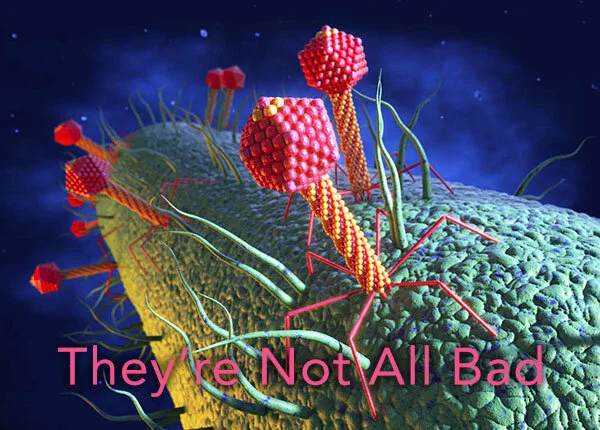
  • Bacteriophages (phages) are viruses that selectively target and kill bacteria. They are the most abundant commonly occurring natural entities, playing crucial roles in regulating bacterial populations and influencing microbial ecosystems.
  • Phages are useful as they can destroy bacteria resistant to drugs such as antibiotics. Phages infect their bacterial hosts with great specificity. They do not infect human cells.
  • Antimicrobial resistance (AMR) poses a serious global threat to our ability to treat bacterial infections. New antibiotics have often proved difficult and expensive to develop. This has led to an interest in an older approach to treating microbial infections by using phages. Phage therapy can be a promising tool for controlling AMR, which is one of the top global public health and development threats.
  • In the WHO European Region, AMR is directly responsible for 133 000 deaths each year and indirectly linked to 541 000 deaths. Estimates show that AMR costs the European Union and European Economic Area about €11.7 billion each year due to health expenditure and workforce productivity losses.
  • Addressing AMR requires a multifaceted approach that considers the interconnectedness of human, animal, and environmental health – known as the One Health approach. Phages provide biologically innovative approaches to addressing the challenge of AMR across sectors, ranging from therapeutic use in humans and animals to potentially replacing antibiotic use in the agricultural sector.
  • Currently, phages are primarily used on compassionate grounds, in life-threatening situations, when all other treatments have been exhausted.
  • Further evidence from clinical studies is needed before phages can become widely available for human use. Phage application and therapy requires robust evidence to support its efficacy, safety, and feasibility across all One Health sectors.

How can phages be used to treat bacterial infections?

Phages that are used for therapy are lytic, which means that they infect and destroy bacterial cells, effectively preventing the onward spread of infection.

Phages are highly specific to their bacterial hosts, that is the bacteria they target. They do not infect human cells but can target and kill bacteria that could cause disease without disrupting the body’s normal microbiota or causing significant side-effects. Phage therapy can be tailored to individual bacterial infections, particularly those that are resistant to antibiotics. Phages can be combined to make mixtures that can target most common infections. Phages can also be used alongside antibiotics to enhance treatment efficacy, especially against infections with antibiotic-resistant bacteria. In medicine, phages have been described as a “personalized medicine” – a group of treatments adapted to each patient individually. 

In some countries in the eastern part of the WHO European Region, phages are more broadly used as a treatment for bacterial infections, especially when antibiotics fail.

However, unlike antibiotics, phages are not approved medicines (biological medicinal products) in most countries. Therefore, they are primarily used on compassionate grounds, in life-threatening situations, when all other treatments have been exhausted. 

Further evidence from clinical studies is needed before phages can become available more widely for therapeutic use in humans. 

How can phages be useful in combating AMR?

Phage therapy can be useful in the treatment and prevention of infections in humans, animals and plants, and potentially in the environment.

In humans, phages can be used as therapy for bacterial infections that are resistant to antibiotics, which means those that no longer respond to antimicrobial medicines. Case studies have shown the successes of phage therapy in the treatment of infections caused by bacteria, such as methicillin-resistant Staphylococcus aureus and Pseudomonas aeruginosa.

In veterinary medicine, phages are used to treat infections in livestock and companion animals, reducing the reliance on antibiotics and thereby decreasing the overall consumption of antimicrobials, which is considered a key factor in the development and spread of AMR. In agriculture and food production processes, phages can be applied to control bacterial diseases. Phages are used to target harmful bacteria like salmonella and Escherichia coli in poultry and cattle, reducing infections without relying on antibiotics.

Phage treatments are currently applied to crops like tomatoes, peppers, and potatoes to control bacterial pathogens such as Xanthomonas and Erwinia that cause diseases like bacterial spot and soft rot. Likewise, phage sprays are used to manage a serious bacterial disease caused by Erwinia amylovora, which affects apple and pear orchards.

In aquaculture, phages can replace the use of antibiotics and chemicals that may contribute to the development of AMR.

Other potential environmental uses of phages include disinfecting hospital surfaces and wastewater treatment.

Environmental phages could play an important role in One Health responses to AMR by helping us to better understand, control and limit the global and local emergence, selection and transmission of antibiotic-resistant bacteria and their genes.  

The potential broader adoption of phage therapy requires further robust evidence to support its efficacy, safety, and feasibility across all One Health sectors. 

Are phages new?

Phages have long been used to control microbes in human, animal and environmental settings. Many countries in eastern Europe have used phage therapy for over 100 years. In western Europe, phages are primarily used on compassionate grounds, in life-threatening situations, when all other treatments have been exhausted.

However, more evidence is needed to support the wider routine use of phages in humans.

Are phages substitutes for antibiotics?

Phages could offer an alternative to traditional antibiotics or be used in combination with them to enhance treatment efficacy.

In the case of drug-resistant bacteria, phages provide a biologically innovative approach to treating infections that can no longer be treated with traditional antibiotics.

However, further evidence from clinical studies is needed before phages can become widely available for routine therapeutic use in humans.

Can phages be used against all bacterial infections?

No, phages cannot be used for the treatment of all bacterial infections as it might not be possible to identify corresponding phages and amplify them for all bacterial infections. Although phages may be found, they might not have the right properties needed to treat infection.

Bacteria can develop resistance to phages, and complex, mixed infections would need treatment with a combination of multiple phages. For specific bacterial infections, phage therapy holds promising potential, but it cannot be used universally against all infections. 

Can phages be dangerous to humans?

Phage therapy is generally considered safe for humans as phages do not target human cells. They do, however, interact with human cells that can take them up, which could be a useful way of targeting intracellular bacteria.

Nonetheless, there are some risks because, like antibiotics, phages can cause the release of endotoxins (toxic substances from bacterial cell walls), leading to inflammatory responses, especially in large-scale infections. 

Further evidence from clinical studies and monitoring are needed before phages can become widely available for therapeutic use in humans.

Will phage resistance develop like for antibiotics?

Bacteria can develop resistance to phages, just like they can develop resistance to antibiotics, but phage-resistant bacteria are often less harmful. In response, phages can evolve, which can increase their effectiveness again. More research is needed to better understand phage resistance.

What is the future of phages as human medicine?

Like many personalized medicines, phages currently struggle to meet regulations designed for conventional medicines produced to a single formulation.

Further evidence from clinical studies and monitoring are needed before phages can become widely available for therapeutic use in humans. The path to regulatory approval for phage therapy needs to be addressed due to their biological nature and the need for personalized therapy approaches. Regulators may consider setting clinical trial and manufacturing standards for phages that reflect their unique characteristics and specificity for each patient treated.

How does WHO/Europe advance the evidence base on phages?

The existing expertise on phage research and practical application in the WHO European Region provides an opportunity to contribute to innovation.

WHO/Europe is working in close collaboration with the Global Antimicrobial Resistance Research and Development Hub in Berlin to explore the potential of phages for addressing AMR. Further research is needed to understand the full potential and mechanisms of phages in treating infections with different antibiotic-resistant bacteria and other diseases, and to develop standardized phage therapy protocols.

WHO/Europe is contributing substantially to the global evidence base on phages from a One Health perspective by raising awareness, fostering dialogue, strengthening international networks, and supporting the development of evidence. 

UC San Diego Researchers Expand Virus-Based Treatment Options for Antibiotic-Resistant Infections


Antibiotic resistance is one of the most pressing challenges to global public health as harmful microbes evolve to evade these medications. Now, researchers at University of California San Diego and their colleagues have developed a new method to combat antibiotic-resistant bacteria using bacteriophages, or phages, for short — viruses that infect and kill bacteria — as an alternative to traditional antibiotics.

The researchers targeted Klebsiella pneumoniae, a species of bacteria notorious for its ability to resist multiple antibiotics. The dangerous pathogen can cause severe infections in hospital settings, including pneumonia and sepsis. While phages have been used as a treatment for bacterial infections for over a century, they are extremely specific about which strains of a bacterial species they will attack. This has limited their effectiveness against the most antibiotic-resistant strains.

To overcome this problem, the research team "trained" the phages by allowing them to evolve together with the bacteria in a controlled laboratory setting for 30 days.

This technique, called “experimental evolution”, permitted the phages to adapt to bacterial defenses. This resulted in significant improvements to their ability to kill a wide variety of bacterial strains, including multidrug-resistant and extensively drug-resistant K. pneumoniae — strains that pose a significant challenge to modern medicine.

What’s more, the evolved phages also demonstrated an enhanced ability to suppress bacterial growth over extended periods of time.

Genetic analysis revealed that the evolved phages acquired mutations to specific genes responsible for recognizing and binding to bacterial cells to initiate the infection process. These changes likely contributed to their improved effectiveness.

The research, led by senior author David T. Pride, M.D., Ph.D., professor of pathology at UC San Diego School of Medicine, highlights the potential of phage therapy as a powerful tool to address the global antibiotic resistance crisis. The team believes their method could be adapted to target other resistant pathogens, offering an avenue for developing treatments against a wide range of life-threatening infections.

The study was published in Nature Communications on November 19, 2025.

Eating from the Bible : Jordan Rubin says a diet based on the Bible and eating the way God intended saved him from an incurable illness


Jordan S. Rubin is a nutritionist and a naturopath, but his "Maker's Diet," based on the health precepts Jordan found in the Bible, is not a product of his advanced degrees, but his own illness and his particular brand of Christianity. His regimen, which precludes pork or shellfish, is the latest to update the ancient Jewish kosher laws, outlined in the Old Testament, for Christians--not as a matter of devotion but of diet. We talked to him recently about how his plan incorporates (and goes beyond) kosher eating, about his own health, and his faith.

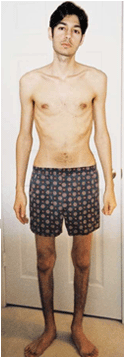
At his sickest, Rubin weighed just 114 lbs.

The story of your recovery is very compelling. Could you re-cap it?
Ten years ago, at age 19, I was diagnosed with Crohn's Disease. In addition, I had everything from arthritis to diabetes to chronic fatigue to hair loss, anemia. I was a complete mess. In one seven-week period, I lost 20 pounds. This was after being a completely healthy 185-pound, college athlete on academic scholarship. I traveled the world trying every treatment you could think of, conventional medicine, alternative medicine. It all failed. I was in a wheelchair and was facing a very risky and life altering surgery.

How did you get back to health? MORE>>>>>>>>>>>>>>

The next pandemic is already here: Antimicrobial resistance is upending a century of achievements in global health


 Almost a century ago, the discovery of antimicrobials changed the course of modern medicine. We saw previously fatal infections—pneumonia, sepsis, tuberculosis—become treatable, and surgeries become safer. Millions upon millions of lives have been saved since then.    

But that is changing. Today, due to misuse and overuse of these medicines, medical advances long taken for granted are at risk of being erased. Bacteria, viruses, fungi and parasites are quickly changing and becoming resistant to antimicrobials. Globally, one in six bacterial infections now resists standard antibiotics amid rising rates of resistance. The result: common infections are becoming harder to treat — increasing the risk of disease spread, severe illness and death. 

As a doctor and surgeon in Tonga, I visited provincial hospitals and saw patients battling infections that no longer responded to the medicines we relied on. I remember a young child brought in with sepsis. We tried every antibiotic available, but nothing worked. Unfortunately, the child did not survive. That moment has stayed with me as a constant reminder that antimicrobials are precious, fragile tools in a physician’s arsenal - tools we are in danger of losing. 

The pandemic of antimicrobial resistance – or AMR - isn’t a science-fiction scenario. In many ways, it’s already here.

Countering the threat of antimicrobial resistance.  More>>>>>>>>>>>

Staggering amount of sugar and calories in Starbucks and Dunkin' Donuts drinks revealed


'For perspective, the recommendation on added sugar consumption is between 25-36 grams per day depending on age, activity level, etc.,' Lisa Moskovitz, RD, founder of The NY Nutrition Group, told the Daily Mail.


READ MORE>>>>>>>>>

Two thirds of British teens set to have mental health problems by 2030, warns new report

 Almost two-thirds of British teenagers could be diagnosed with a mental health condition by 2030, a new report has warned.

Analysis by Zurich Insurance found that 51 per cent of 15 to 19-year-olds in the UK currently have a mental or behavioural condition such as depressionADHD and anxiety. 

Almost two-thirds of British teenagers could be diagnosed with a mental health condition by 2030, a report has predicted

Almost two-thirds of British teenagers could be diagnosed with a mental health condition by 2030, a report has predicted

READ MORE>>>>>>>>>

Young cancer timebomb: Major study blames takeaway chemicals, school uniforms and frying pans for surge in under-50s diagnoses


 Artificial ingredients in takeaway meals and 'forever chemicals' found in school uniforms and frying pans may be helping drive a surge in deadly cancers among young people, a major new report warns.

British scientists also believe antibiotics could be part of the mystery behind a rise in 11 cancers among adults aged 20 to 49.

It adds to a growing global picture. In the US, early-onset cancer cases rose by almost 15 per cent between 2010 and 2019, with younger adults increasingly being diagnosed with diseases once seen mainly in older age.

'Whilst BMI [weight] remains our best clue as to why cancer is on the rise in this age group, much of the increase still remains unexplained,' said Professor Montserrat García-Closas, of The Institute of Cancer Research in London.

READ MORE>>>>>>>>>

Cucumbers, the juicy truth: How the water-packed vegetable can improve your skin and digestion

 Cucumbers are a staggering 95 per cent water, making them one of the most hydrating foods we can eat.

The Queen liked her cucumber sandwiches with a smear of yogurt and sprigs of fresh mint

The Queen liked her cucumber sandwiches with a smear of yogurt and sprigs of fresh mintR

READ MORE>>>>>>>>>>>>>>>

Can Food Actually Be Medicine? These Doctors Say Yes


 Lauren Estess, a third-year student at Tufts University School of Medicine, believes knowing how to make chickpea stew will make her a better doctor.

She and 14 other students spent a recent evening making dinner as part of a two-month culinary medicine class to train doctors, dentists and dietitians that the university began offering last spring. Using case studies and cooking, the course aims to convince future medical professionals that good, affordable food targeting specific diseases can be as important as medication.

“It’s unfortunately a big misconception that medicine doesn’t have anything to do with food,” she said, chopping dill with hands she hopes will one day be delivering babies.

MORE>>>>

New study suggests link between melatonin use and heart disease


KIDNEY STONES on the RISE


kidney-stone-image
By , Senior Faculty Editor, Harvard Health Publishing; Editorial Advisory Board Member, Harvard Health Publishing


In the past, medical textbooks described the typical person unlucky enough to develop a kidney stone as a white, middle-aged, obese man who eats an unhealthy diet and doesn’t drink enough fluids. Those books may need an update.  A new study has found not only that the incidence of kidney stones is going up, but that they are also developing in people not considered high-risk in the past, including children, women, and African Americans.

Why stones?

Kidney stones develop when certain chemicals in the urine, such as calcium or uric acid, form crystals. Risk factors for stone formation include

  • diet, including high intake of animal protein, sodium, and sugar, as well as low intake of fluids
  • certain conditions, such as gout, diabetes, and obesity
  • some medications, including calcium supplements
  • family history and genetics — kidney stones can run in families, although the specific contributions of shared genes versus shared environments and diets are uncertain.

More people hospitalized with life-threatening condition after eating contaminated cheese

Editor's note:  This probably is not a fair report, as news and cdc is against raw milk, but time will tell and we bring you the news as reported here

Two more people have been sickened in an outbreak linked to raw milk and cheese sold by RAW FARM (stock image)

Two more people have been sickened in an outbreak linked to raw milk and cheese sold by RAW FARM (stock image)

 More people have been sickened and hospitalized with E.coli in an outbreak linked to eating cheese made with raw milk.

The CDC revealed the new illnesses Thursday, bringing the total to nine, including three who have been hospitalized, and one who has developed hemolytic uremic syndrome, a serious condition that can cause kidney failure.

Of the seven patients interviewed, all said they had consumed RAW FARM-branded products. Five reported consuming raw cheddar cheese, sold either in a block or shredded, and two reported consuming raw milk.

MORE>>>>>>


Probiotics could help in fight against intimate bacterial infection that hits more than three million women every year


 Researchers have found a potential breakthrough in preventing bacterial vaginosis, a condition affecting around one in three women at some point in their lives.

The infection – also known as BV – is caused by an imbalance in the bacteria that normally live in the vagina, often triggered by sex.

While it usually causes mild symptoms such as unusual discharge, BV can have serious consequences, including an increased risk of infertility, contracting sexually transmitted infections, premature birth and even newborn death.

It is routinely treated with antibiotics but can be notoriously difficult to eliminate. Around half of women see the condition return within a few months of treatment.

Now, a new clinical trial has shown that restoring protective 'good' bacteria in the vagina can significantly reduce the risk of the condition coming back.

The study was carried out by researchers from Mass General Brigham, the Centre for the AIDS Programme of Research in South Africa and the Vaginal Microbiome Research Consortium.

Participants were recruited from the US and South Africa. All 90 women in the trial had BV and were first treated with standard antibiotics. 

After completing antibiotics, participants were randomly assigned to take either a placebo or a once-daily oral probiotic tablet containing several strains of beneficial bacteria normally found in a healthy vagina. 

Read More >>>>>>>>>>>>

The New Year - 1st Day of Spring Let there be light!

Daffodils in an English garden … nature is a well-established mood-enhancer. Photograph: Rosemary Calvert/Getty Images 

Like prisoners waiting to be released from winter, we on these small islands in the northern hemisphere have been willing spring on for weeks now, watching for signs. The hours of light are growing apace, as the shadows shrink. Chilly daffodils nod at us from municipal flower beds. Are the skies even getting bluer? Our senses are alert in ways we don’t fully understand, like a pleasing, hazy inheritance from the wild creatures we once were.

Spring has two official start dates, depending on your priorities. For meteorologists, spring already sprung on 1 March, according to their neat, evenly spaced seasons, formalised in the 1900s. But if you plot the seasons in line with our planetary activity, as humans have done for thousands of years, the “astronomical” seasons show spring starting at the vernal equinox, which this year falls this year on 20 March. Just a few days to go …

Are you deficient in nitric oxide, the most critical molecule for cardiovascular health?


Ethan Huff of Natural News

(Natural News) One of the key components of cardiovascular health that many people overlook is a molecule called nitric oxide, or NO, which according to Nathan S. Bryan, PhD, is involved in virtually every organ system of the body.


Almost every form of cardiovascular disease begins with the loss of NO production in the body. The same is true of pretty much every chronic disease and age-related illness, whether it manifests in the kidney, the brain, the heart, or the liver.

All of these conditions have a vascular component, Bryan says. An international leader in the molecular medicine and NO biochemistry, Bryan says the common underlying factor for most chronic illnesses is a lack of oxygen-rich blood reaching certain body parts, NO being the molecule that makes it all happen.

“The lack of NO production can lead to high blood pressure, sexual dysfunction, and chronic inflammatory vascular disease leading to heart attack, stroke, or heart failure,” explains a report from The Epoch Times that cites Bryan’s work.

“The body naturally begins to produce less nitric oxide as we age but this gradual loss of NO can be sped up or slowed down based on individual lifestyle and diet.”

Nitric oxide is essential for improving vasodilation, fighting inflammation, and preventing the formation of arterial plaque

Dr. Caldwell Esselstyn, the renowned director of the Heart Disease Reversal Program at the Cleveland Clinic, is another expert who says that the single most important factor impacting cardiovascular health is NO.

Its most important function throughout the body is vasodilation, which is the relaxation and widening of the inner muscles of your blood vessel. Vasodilation helps more oxygen-rich blood to travel freely throughout your body and get to where it needs to go in order to keep you healthy, fit, and strong.


Two other things Esselstyn says NO helps with is:

• Fighting inflammation by preventing arterial thickening, which can restrict blood flow, cause hypertension, and increase the heart’s workload

• Preventing the formation of plaque by reducing the “stickiness” of low-density lipoprotein (LDL) cholesterol and other elements that can build up in arteries and cause serious health problems.

Alzheimer’s disease and other forms of dementia are another class of illness for which NO can provide remedial and preventive benefits. Since the common denominator in these diseases is lack of blood flow to the brain, NO’s vasodilation, anti-inflammatory, and blood-thinning properties are a powerful weapon against dementia.

By now, you are probably wondering how you can improve your body’s NO stores, as well as how to minimize exposure to things that damage them. Here is what we know:

1) The body relies on a healthy balance of oral and gut bacterial microbiomes. Eating more probiotic-rich foods or taking probiotic supplements may help in this regard.

2) Beets, leafy green vegetables, garlic, meat, citrus fruits, nuts and seeds, and dark chocolate all contain nutritional components that help boost the body’s ability to naturally produce NO.

3) Working out, meaning exercise and rigorous activity, tells the body’s endothelial cells to produce more nitric oxide – so get moving!

“There is concrete evidence that physical activity enhances NO [nitric oxide] production,” concluded a 2021 study published in The Journal of Sports Medicine and Physical Fitness.

4) Increasing your exposure to the sun, which will also help boost your body’s vitamin D stores.

Some signs that your body may already be deficient in NO and in need of help include:

• Increased blood pressure

• Erectile dysfunction in men

• Vasculogenic sexual dysfunction in females

• Arterial plaque and inflammation

If an NO deficiency persists for too long, it can result in a heart attack or stroke, which are the leading killers of both men and women worldwide.

More related news that you can use to help support your health naturally can be found at Remedies.news.

READ MORE>>>>

Should Women Stop Getting Mammograms?

The arrow on this mammogram points to a small ...
The arrow on this mammogram points to a small cancerous lesion. A lesion is an area of abnormal tissue change (Photo credit: Wikipedia)
Is it time to scrap the mammogram?
 
A blockbuster Canadian study has added fuel to the already heated debate concerning the benefits of regular mammograms. According to the study, annual screening of women aged 40 to 59 did not lower breast cancer death rates despite current recommendations that this age group get mammograms every year.
 
The new research is convincing because of its scope and thoroughness. For 25 years, researchers followed nearly 90,000 women who were randomly assigned to either get mammograms or no screening.  The conclusion: Women getting mammograms were just as likely to die from breast cancer as those who didn't get them.
 
What's more, experts warn that the radiation used in mammograms may actually cause cancer.
 
"I haven't been a fan of mammograms for years," Christine Horner, M.D., a nationally known surgeon, author, and expert on breast cancer who lives in San Diego, tells Newsmax Health. "I agree with all the reasons stated in the study. I think it is much better to use technology that doesn't use radiation such as thermography, ultrasounds, and physical exams to detect breast cancer."

Read Latest Breaking News from Newsmax.com http://www.newsmaxhealth.com/Health-News/mammogram-guidelines-recommendations-benefits/2014/02/19/id/553511#ixzz2ts5l9VqS
Alert: What Is Your Risk for a Heart Attack? Find Out Now
Enhanced by Zemanta

Did Wheat Hybridization Give Rise To Celiac Disease?

Einkorn is considered the "wheat of Abraham" and the earliest cultivated grain, originating in the Fertile Crescent around 10,000–12,000 years ago. As a non-hybridized, ancient diploid wheat ( 14 chromosomes) it is highly nutritious, with higher protein and minerals, and a lower glycemic index compared to modern wheat. It is often tolerated better by those with gluten sensitivities.


Starting in the 1960’s, and increasingly in the 1990’s, plant breeders undertook efforts to produce hybrid wheat varieties with the goals of improving yield and disease resistance. Both worthwhile goals but it’s possible that wheat hybridization may have led to the rapidly growing prevalence of celiac disease today.

We learn that not all gluten is created equally. A study identifies that, “Gluten proteins from wheat can induce celiac disease (CD) in genetically susceptible individuals. Specific gluten peptides can be presented by antigen presenting cells to gluten-sensitive T-cell lymphocytes leading to CD.”1

The same abstract explains that a study of over 80 varieties of wheat shows a higher concentration of two CD epitopes (Glia-α9 and Glia-α20) in the more modern varieties of wheat.

This study suggests the possibility that hybridization of wheat may be an underlying cause for the recent rise in CD but does that mean that einkorn is the answer? Not necessarily.  Einkorn is an ancient, diploid variety of wheat – the most primitive species of wheat available today. Many people worldwide are working to restore it to our modern diets because of its dietary benefits.

So far, the studies on einkorn’s toxicity have been mixed, although it is considered less toxic than modern wheat.  For that reason – though they express an interest in doing so – we always recommend that celiac patients should not consume einkorn.  After consulting with their doctor, gluten sensitive people, on the other hand, have reported that they consume eikorn with diminished or no reaction.  In addition, naturally leavening bread also seems to help with digestibility, and we’ll share more on this in the coming months.


Read the article here>>>>>>>>>>


Want to make breakfast the healthiest meal of your day?

Consider making breakfast the biggest meal of your day — while also including more fruits, vegetables, nuts, beans and other fiber-rich plant foods.

That’s according to the findings of a small but striking new study that compared what happened when people followed diets that were high in either protein or fiber. On both diets, participants ate a large breakfast and a small dinner — the exact opposite of how people typically eat in the United States and many other countries, where dinner is usually the largest meal of the day and breakfast the smallest.

The study, which was published in the British Journal of Nutrition, found that both the high-protein and high-fiber diets provided benefits. People experienced more satiety on the high-protein diet. But eating more fiber led to more weight loss. (All the participants were overweight or obese.) It also boosted their gut microbiomes, leading to an increase in intestinal microbes that have been linked to better gut and metabolic health.

Cancer and Vaccines? Japan's Study

 During the COVID-19 pandemic, excess deaths including cancer have become a concern in Japan, which has a rapidly aging population. Thus, this study aimed to evaluate how age-adjusted mortality rates (AMRs) for different types of cancer in Japan changed during the COVID-19 pandemic (2020-2022). Official statistics from Japan were used to compare observed annual and monthly AMRs with predicted rates based on pre-pandemic (2010-2019) figures using logistic regression analysis. No significant excess mortality was observed during the first year of the pandemic (2020). However, some excess cancer mortalities were observed in 2021 after mass vaccination with the first and second vaccine doses, and significant excess mortalities were observed for all cancers and some specific types of cancer (including ovarian cancer, leukemia, prostate cancer, lip/oral/pharyngeal cancer, pancreatic cancer, and breast cancer) after mass vaccination with the third dose in 2022. AMRs for the four cancers with the most deaths (lung, colorectal, stomach, and liver) showed a decreasing trend until the first year of the pandemic in 2020, but the rate of decrease slowed in 2021 and 2022. This study discusses possible explanations for these increases in age-adjusted cancer mortality rates.


MORE >>>>